
How Smart Spoons Work for Hand Tremor
TL;DR
- A smart spoon uses motion sensors and a motor to counteract hand tremor during eating.
- It suits moderate to pronounced Essential Tremor (ET) or Parkinson's-related tremor.
- It reduces the effect of tremor while eating, but it is not a cure.
- Smart spoons are active and motorized; swivel spoons are passive and mechanical.
- An occupational therapist can confirm whether a motorized device is a good fit.
When hand tremor makes eating challenging, and spills start to undermine independence at the table, a smart spoon offers a technology-driven answer: a motorized, sensor-based utensil that detects and counteracts unwanted movement in real time. This guide explains how the system works, who can benefit, and the potential improvements to consider before deciding if it's right for you.
The Core Technology Behind Smart Spoons
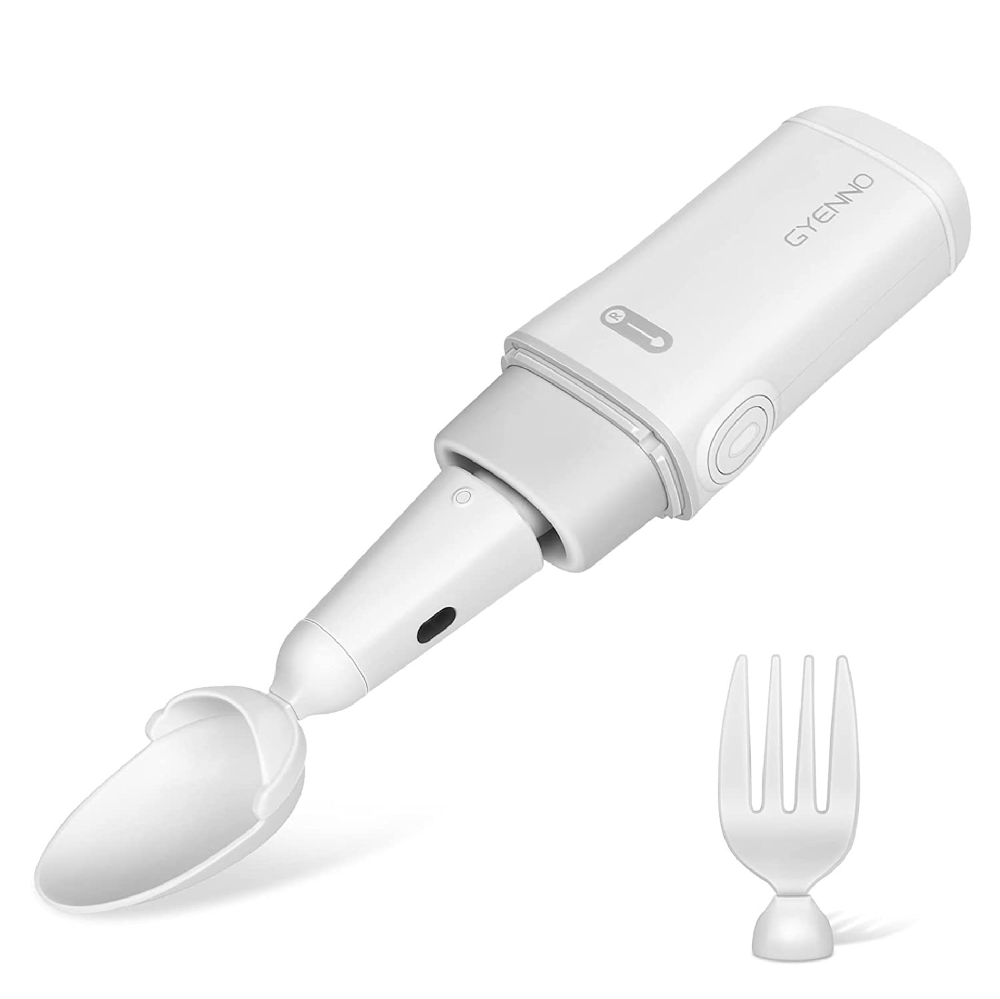
Inside the handle, a built-in motion sensor continuously reads the direction and speed of hand tremor. When it detects unwanted movement, a small motor moves the utensil head in the opposite direction to counteract the shake. The net effect is that the bowl stays comparatively steadier than the hand holding it, so food has a better chance of reaching the mouth without spilling. Because the correction happens automatically, the user simply eats as normal.
Who Benefits Most From a Motorized Stabilizing Spoon
Motorized stabilizing spoons tend to help people with moderate to more pronounced hand tremor, where spills and missed bites are a daily frustration. They are commonly used for Essential Tremor (ET) and Parkinson's tremor. Many people come to this category after trying a passive swivel spoon and finding it doesn't compensate enough. When tremor amplitude is higher, an active, sensor-driven response often makes a more noticeable difference at the table.
How Much Tremor Reduction to Realistically Expect
Gyenno, for example, states that the Bravo Twist reduces shakes by up to 85% compared with a normal utensil. Read figures like this as manufacturer claims, not guaranteed outcomes for every user. Results vary by individual tremor pattern and severity. A smart spoon is a compensation tool for eating, not a treatment for the underlying condition. It reduces the effect of tremor during a meal, but it does not change the tremor itself.
Smart Spoon vs. Swivel Spoon: What's the Real Difference
The core difference is active versus passive. A swivel spoon is mechanical, using gravity and a hinged bowl to stay level. A smart spoon is motorized and actively counteracts movement through sensors and a motor. Seeing the two side by side makes the trade-offs clearer.
Feature | Swivel spoon | Smart spoon |
Mechanism | Passive, mechanical | Active, motorized |
Higher-amplitude tremor | Limited compensation | Better suited |
Price and complexity | Lower | Meaningfully higher |
Battery Life and Everyday Practicality
A rechargeable battery is standard across this device category. Typical charge and run-time patterns are designed to support multiple meals between charges, so most users recharge on a predictable routine rather than mid-meal. The practical trade-off is more upkeep than a swivel utensil. You will charge the handle, keep track of its battery level, and clean detachable attachments after use. Building charging into a daily routine keeps the handle ready for each meal.
Interchangeable Attachments and Meal Flexibility
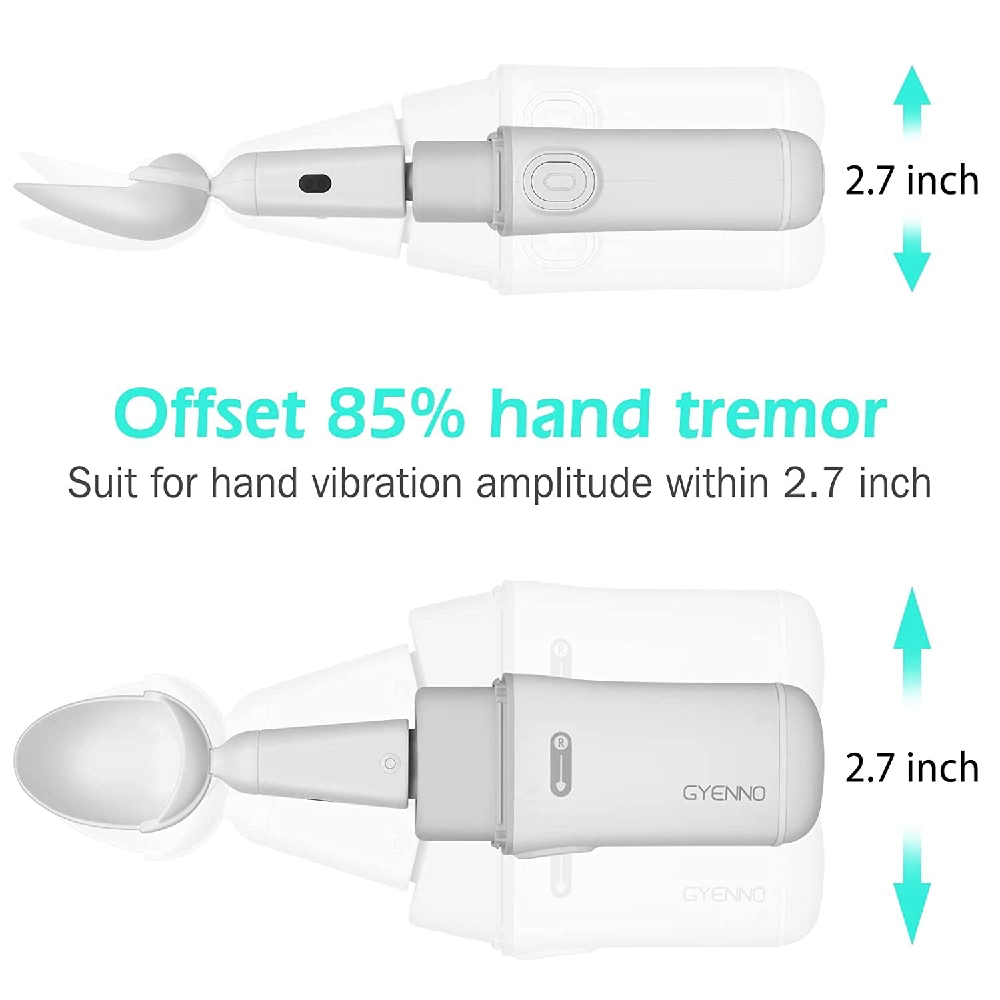
Meal flexibility is a common buying consideration. Many devices support swappable heads, so a spoon attachment and a fork attachment share the same stabilizing handle and let you move between different foods.
Some models add rotational features that help with foods like noodles. Attachment compatibility varies by device and brand, so confirm which heads a specific model supports before you commit. Checking first helps you match a model to your usual foods.
Companion Apps and Tracking Features
Some devices pair with a companion app on a smartphone, adding tremor tracking that logs frequency and amplitude over time. The handle gathers movement data during normal use, and the app turns it into a record you can review.
This can help you share patterns with a care team between appointments. It is an optional layer, though, and the basic stabilizing function works whether or not you open the app.
Realistic Limitations to Know Before Buying
A smart spoon is helpful, but it has limits worth knowing up front. Some users find the handle bulky compared with an ordinary utensil, which can take time to get used to. Attachment compatibility with certain foods can be inconsistent, particularly very dense items that are hard to scoop. Most people also need an adjustment period to get used to the counteracting motion.
Cleaning and Maintaining a Motorized Spoon
Care differs from a simple utensil because the spoon involves electronics. Attachments are typically detachable so you can wash and clean them, while the electronic handle is not submerged in water. You will also need to keep a regular charging cycle, which a swivel utensil never requires. Because steps vary by model, always follow the manufacturer's guidance for the specific cleaning method.
Getting a Professional Opinion Before Buying
Before spending on a motorized device, it helps to involve a clinician. An occupational therapist can assess whether your tremor severity actually warrants a motorized spoon or whether a simpler option would serve you. Where a trial period is available, it lets you confirm the fit in real meals before you buy. Cost is a meaningful factor too, and it is worth discussing openly with your care team.
A Device-Based Option in the Catalog
Pisces Innovation distributes the Gyenno Bravo Twist, a motorized, sensor-based stabilizing spoon with a fork attachment designed to counteract hand tremor during meals. It is designed as an assistive eating tool, not a registered medical device. Interchangeable spoon and fork heads let it move between different foods during a meal, and its rechargeable handle fits the same daily charging routine described above.
Is a Smart Spoon Worth It for You
A smart spoon is motorized and sensor-based, and it suits tremor a swivel spoon cannot fully manage. If spills and missed bites are a daily problem and simpler utensils have fallen short, this category is worth considering seriously.
Keep expectations realistic: it reduces the effect of tremor during eating rather than treating the condition. Talking with an occupational therapist about severity, trial options, and cost remains the clearest way to decide. Yes. A smart spoon responds to hand movement in general, not to a specific diagnosis. The motion sensor and motor react to the tremor they detect, whatever its cause. That means these utensils work for Essential Tremor (ET) and other tremor sources, as well as Parkinson’s-related tremor. The mechanism itself is not Parkinson’s-specific. Results depend more on how large and fast the tremor is than on its diagnosis. A clinician can help you decide whether it suits your situation. No. Devices in this category are generally sold as assistive eating aids rather than registered medical devices, so you usually don't need a prescription to buy one. That makes the choice more personal, which is why advice from a care team matters. Before buying any model, ask the seller to confirm its exact regulatory status, and check that its materials and care instructions suit daily use at home and when eating out. The deciding factor is usually how far the hand moves. If spills come mainly from a small, fine tremor, a swivel spoon is often enough and needs no charging. If the hand travels further or moves in larger, faster bursts, a smart spoon’s sensors and motor can respond where gravity alone cannot. Some people keep both, using the swivel spoon for quick snacks and the smart spoon for main meals at home. Runtime varies by model, so check the manufacturer's stated figure for the one you choose. To avoid running low mid-meal, many people charge smart spoons overnight or between meals, like a phone. If the spoon travels with you, check the charge before leaving home for the day. If a battery drains noticeably faster over time, contact the seller about service. Some models do. If yours has one, the most useful habit is reviewing the log before appointments and noting changes, such as tremor that seems stronger at certain times of day. Bring a short summary or a few screenshots rather than raw data. The app records how the hand moves during meals, not a diagnosis, so the care team will read it alongside a clinical assessment of your smart spoon use. An occupational therapist is a good first contact, and it helps to arrive with questions. Ask whether your tremor is likely to overwhelm a swivel spoon, which foods cause the most trouble, and whether the clinic can arrange a trial. A neurologist can also comment on how your tremor may change over time, which affects whether a motorized anti-tremor spoon is a sensible long-term choice. Writing these questions down before the visit makes the appointment more useful.Frequently Asked Questions