Shop by Category
    Close
    Filters
    Preferences
    Search Results
    RSS

    2026, October

    0 Adaptive Utensils for Arthritis: What Actually Helps at Mealtimes

    TL;DR

    • Adaptive utensils for arthritis are a category, not one product, matched to your challenge.
    • Built-up handles reduce grip force; angled and bendable designs compensate for limited wrist motion.
    • Weighted utensils suit tremor, not grip pain alone; trial them individually.
    • Non-slip plates and rocker knives complete a stable, one-handed mealtime setup.
    • An occupational therapist can match the right tool to your specific impairment pattern.

    For many people, adaptive utensils for arthritis answer a daily question: how do you eat comfortably when gripping a narrow handle is painful, not just awkward? Mealtimes are a fundamental activity, and losing independence there carries practical and emotional weight. Different types of arthritis and hand impairment call for different tools, so this article maps what each design addresses.

    Why Arthritis Makes Standard Utensils Difficult

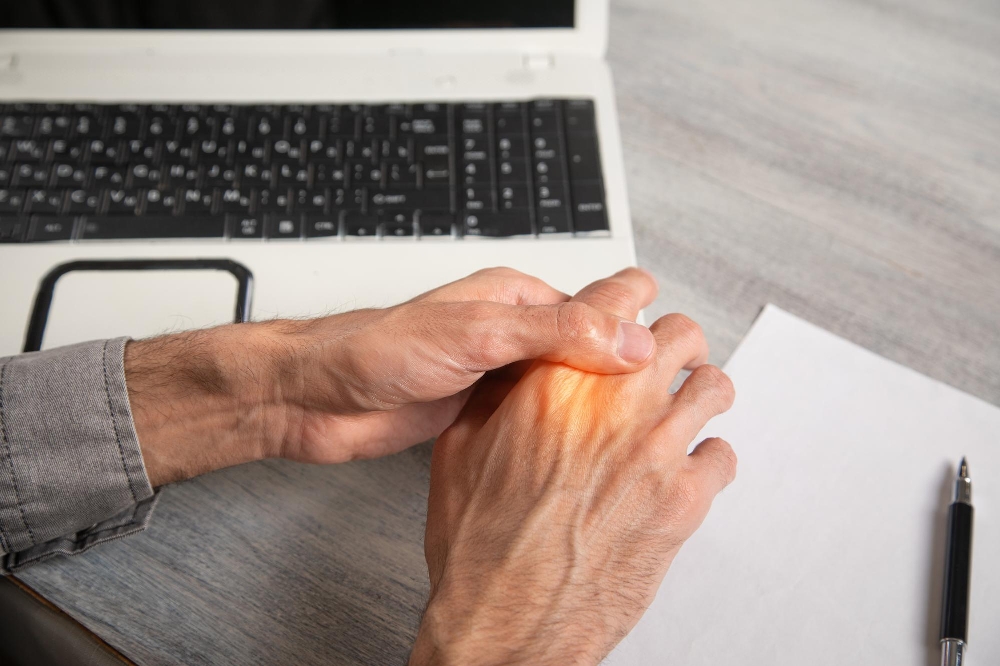
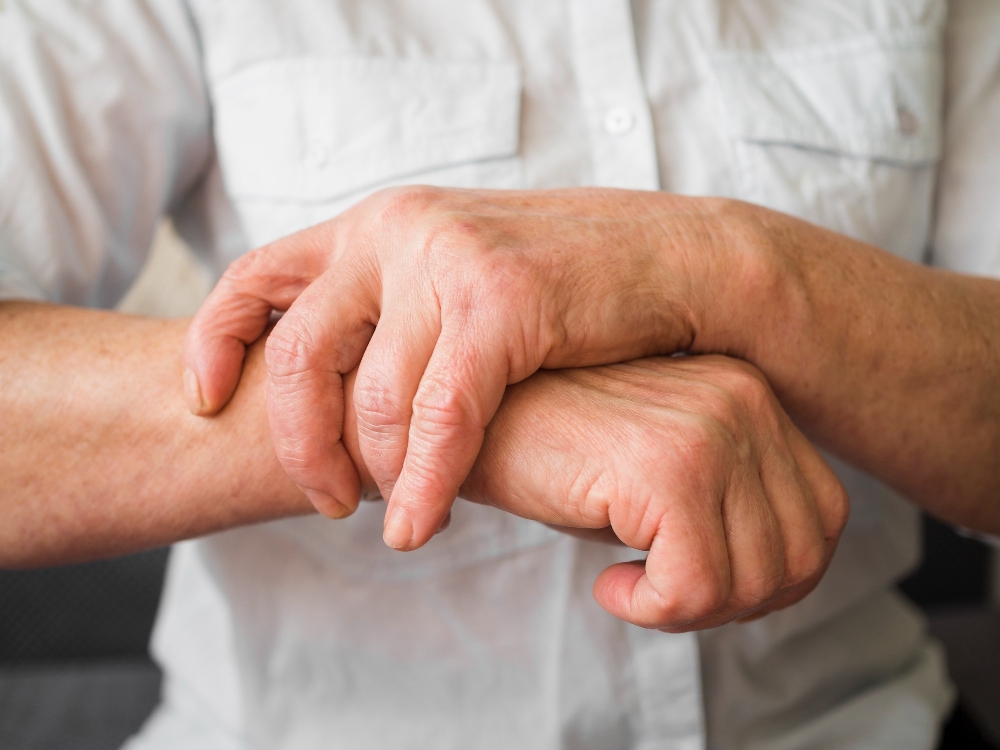
    A standard utensil handle is narrow, requiring near-full finger flexion and sustained grip force to stop it rotating. Both load the small MCP, PIP, and DIP joints that osteoarthritis and rheumatoid arthritis compromise most. Pain is not the only barrier: limited range of motion at these joints can make the basic grip pattern difficult regardless of strength. Assistive devices are a recognized component of conservative osteoarthritis care because they reduce force, pinch, and sustained load.

    Built-Up Handles and How They Reduce Grip Force

    A wider handle needs less finger flexion to surround, directly reducing the grip force needed to control the utensil, which is the basis of joint protection at the table. A 2016 study in PeerJ found that larger-diameter handles reduced the hand range of motion needed to grip a utensil, a finding the researchers suggested may extend to people with limited hand ROM. Built-up handles come in foam, rubber, and silicone, and slide-on versions fit existing cutlery. For people managing grip strength and arthritis at mealtimes, these utensils are the accessible first step.

    Angled and Bendable Utensils for Limited Wrist Movement

    Standard eating requires wrist supination to bring a spoon or fork level with the mouth. When wrist, elbow, or shoulder joints carry arthritis, that movement becomes painful or impossible. Angled utensils arrive pre-set at a fixed angle to replace the missing rotation. Bendable utensils let the user or clinician set a custom angle once and maintain it. Choosing between them depends on whether the limited ROM is consistent day to day or variable.

    The Rocker Knife: Cutting Without Gripping

    Cutting places high force and high torque on exactly the joints arthritis compromises most. A rocker knife uses a T-shaped handle held in the palm rather than the fingers and cuts with a rocking motion instead of downward sawing, substantially reducing grip force and wrist demand. It also enables one-handed food preparation for people whose arthritis is concentrated in one hand. Pairing it with a non-slip mat under the cutting board removes the need to stabilize the board with the second hand.

    Weighted Utensils: When They Help and When They Don't

    Weighted utensils add mass to dampen tremor amplitude and provide proprioceptive feedback. They work best when the primary challenge is tremor or incoordination rather than pain. For someone whose arthritis is mainly a pain and grip-force problem, the extra weight can increase the effort needed to lift and control the utensil, making it the wrong tool. The clearest use case for weighted utensils for tremors alongside arthritis is when both are present, such as Parkinson's disease or essential tremor with comorbid hand arthritis.

    Non-Slip Plates and Stabilizing Accessories That Complete the Setup

    Even the right utensil loses effectiveness when the plate shifts. Non-slip materials such as Dycem anchor tableware so effort goes into eating rather than stabilizing. Consider these options:

    • Plate guards: removable raised rim to added standard plate to scoop against.
    • Scoop plates: built in rim on the plate to help with utensil scooping.
    • Non-slip mats: support one-handed eating by holding tableware in place.

    For people managing arthritis in one hand, these accessories free the second hand from holding the plate, supporting mealtime independence.

    How Pisces Innovation Supports Independent Eating

    Pisces Innovation is the exclusive authorized US distributor of Neater Eater adaptive eating and drinking devices. The Neater Eater Manual is designed for people managing conditions such as rheumatoid arthritis, MS, cerebral palsy, Parkinson's disease, and motor neuron disease. This is just one product provided on a spectrum of devices to help meet the users needs. Product pages include specifications to help you and your clinician determine which device may be appropriate.

    Most people with arthritis face more than one challenge, so combining utensil types or adding non-slip tableware is common. A tool that works in a demonstration may still fail at your own table, so trial it in context.

    When Arthritis Also Affects Grip Endurance, Not Just Pain

    Many people manage the first few bites, then find their grip weakens or becomes painful within minutes as sustained grip force accumulates across a meal. By mid-meal, the utensil becomes hard to control even when it feels manageable at first. Built-up handles and universal cuffs help because they reduce grip force throughout, not just at peak exertion. Recognizing grip endurance as separate from acute pain matters, because a first-bite check underestimates difficulty from fatigue or muscle loss.

    The Occupational Therapist's Role in Adaptive Utensil Selection

    Occupational therapists are trained in activities of daily living assessment, including mealtime function. Through an ADL evaluation, an OT can measure grip strength, range of motion, coordination, and pain patterns, then match those findings to specific equipment and provide joint protection education. Their work goes beyond choosing a category to running a utensil trial in context, because a tool that performs in the clinic may still fail at a patient's own table.

    Conclusion

    Adaptive utensils for arthritis are not a single product but a category of tools matched to the impairment behind the mealtime difficulty. Built-up handles ease grip force and pain, angled and bendable designs work around limited wrist motion, weighted utensils suit tremor, and swivel designs help with coordination. Pairing the right utensil with non-slip tableware, and trialing it at your own table, gives the most reliable result, with an occupational therapist guiding complex needs.

    About Pisces Innovation

    Pisces Innovation is the exclusive authorized US distributor of assistive devices for eating, drinking, and tremor management, including the Steadi-3 Plus Anti-Tremor Glove and Neater eating and drinking devices, and has served VA hospitals nationwide for over 15 years. If you are exploring options, our team is here to talk it through.

    Frequently Asked Questions

    The main categories are built-up handle utensils with a wider diameter to reduce grip force, angled and bendable utensils that compensate for limited wrist rotation, weighted utensils that address tremor alongside or instead of arthritis, swivel utensils that keep the head level when hand orientation varies, and universal cuffs that hold a utensil without requiring a grip. The right type depends on whether the primary challenge is pain, grip force, range of motion, or a combination.

    Weighted utensils are most effective when tremor is the primary challenge, because the added mass can dampen hand tremor amplitude and provide proprioceptive feedback. For people whose arthritis is mainly a pain and grip-force problem without a significant tremor component, that extra weight can increase the effort needed to lift and hold the utensil, making mealtime harder. When arthritis and tremor are both present, weighted utensils may help with both at once. Because response varies so much, trialing them before deciding is strongly recommended.

    Start by identifying which mealtime movement is failing. Gripping and holding through a meal points to built-up handles. Rotating the wrist to bring food to the mouth points to angled or bendable designs. Tremor or unsteady hands points to weighted or swivel designs. If the challenge is complex or involves multiple conditions, an occupational therapist can assess the impairment pattern and trial appropriate tools in context.

    Simple DIY modifications can provide meaningful help. Wrapping self-adherent gauze or foam tubing around a standard handle increases grip diameter, the core mechanism behind commercial built-up handle utensils. Moldable materials such as air-dry clay or moldable glue can be formed directly around a handle and shaped to an individual's grip pattern. These are reasonable budget options for mild to moderate grip challenges. For more complex needs, such as limited range of motion, tremor, or one-handed eating, purpose-built adaptive utensils typically provide more reliable results.

    An occupational therapist is the most qualified professional to evaluate which adaptive utensils match your mealtime challenges. They assess grip strength, range of motion, coordination, and pain patterns, then trial tools in the context of actual eating tasks. For complex presentations, such as multiple joint involvement, comorbid tremor, or one-handed eating, an OT evaluation is particularly valuable. An OT referral is not always immediately available, so consulting a knowledgeable distributor or clinical advisor can be a useful interim step.

    Yes. Weighted utensils for tremors are commonly used for essential tremor and Parkinson's disease, while angled and swivel designs assist people managing post-stroke coordination or one-handed eating. Universal cuffs and utensil holders support people with very limited grip strength from causes including spinal cord injury, multiple sclerosis, ALS, and muscular dystrophy. The design principles, reducing grip force, compensating for limited range of motion, and providing stability, apply across conditions when the mealtime impairment pattern is similar.

    0 Adaptive Kitchen Utensils for Elderly: A Buyer's Guide

    TL;DR

    • Adaptive kitchen utensils match a specific barrier: tremor, weak grip, or limited range of motion.
    • Weighted utensils dampen tremor; built-up handles ease weak grip; angled designs reach the mouth.
    • Motorized adaptive spoons help when weight alone no longer controls severe tremor.
    • Start with a single spoon before committing to a full set.
    • An occupational therapist guides complex or multi-condition situations.

    Adaptive kitchen utensils can make a real difference when a shaky hand or an arthritic grip makes mealtimes frustrating and quietly reduces how much a person eats. This is a practical buyer's guide to adaptive kitchen utensils and adaptive silverware for older adults. The organizing principle is simple: the right utensil matches a specific problem.

    Why Standard Utensils Become Difficult With Age

    Three physical changes account for most mealtime difficulty: hand tremor sends food off the spoon, reduced grip strength makes thin metal handles hard to hold, and limited wrist or shoulder range of motion makes it hard to reach the mouth without painful twisting. These often arrive together, as with Parkinson's disease, essential tremor, and arthritis. Adaptive kitchen utensils address each barrier to fine motor skills and dexterity directly, supporting activities of daily living rather than relying on effort or occupational therapy alone.

    The Main Types of Adaptive Silverware

    OTs organize adaptive silverware by the problem it solves.

    TypeSolvesBest suited to
    Weighted utensilsTremor, via added massParkinson's, essential tremor, MS
    Built-up handle utensilsWeak grip, via wider foam gripArthritis, stroke recovery
    Angled/bent utensilsLimited wrist motionStroke, Parkinson's, arthritis
    Swivel utensilsUnpredictable hand tilt, stays levelAdvanced Parkinson's, dementia, cerebral palsy
    Bendable utensilsMixed or changing needsReconfigurable as function evolves
    Rocker knifeOne-handed cuttingStroke, upper-limb amputation


    Choosing Adaptive Kitchen Utensils by Condition

    Symptoms differ within the same diagnosis, so match the barrier before the diagnosis.

    • Parkinson's disease: tremor and grip weakness coexist, so a weighted, built-up set fits; a self-leveling swivel utensil suits advanced hand control loss.
    • Essential tremor: grip strength is often preserved, so start weighted; motorized options help when weight is not enough.
    • Arthritis: foam-handled sets reduce grip force; angled utensils reduce wrist rotation.
    • Stroke: a rocker knife plus angled or bendable pieces address hemiparesis.
    • MS, cerebral palsy, muscular dystrophy: swivel utensils help when movement is unpredictable.

    What to Look for When Buying Adaptive Utensils for Elderly Relatives

    Match handle size to the hand: wide enough to reduce grip force, but not so large that fingers cannot wrap around it.

    • Confirm handedness before buying angled utensils, since many are made for a right or left hand specifically.
    • Plan for a matching set (knife, fork, and spoons) once a trial spoon confirms the right type.
    • Check dishwasher safety: weighted and foam sets are usually top-rack safe, while swivel utensils are hand-wash only.

    Adaptive Eating Utensils and the Role of the Occupational Therapist

    An occupational therapist offers the most reliable path to the right utensil, because the same visible problem, food falling off the spoon, can stem from tremor, grip failure, limited range of motion, or a cognitive change affecting movement sequencing. OT guidance is recommended when eating ability changes suddenly, when weight loss, choking, or swallowing difficulty appears, or when advanced dementia is involved. A functional assessment, mealtime evaluation, and ADL evaluation combine the right utensil with a supportive mealtime setup covering seating, lighting, and timing.

    Adaptive Spoon Options for Hand Tremors

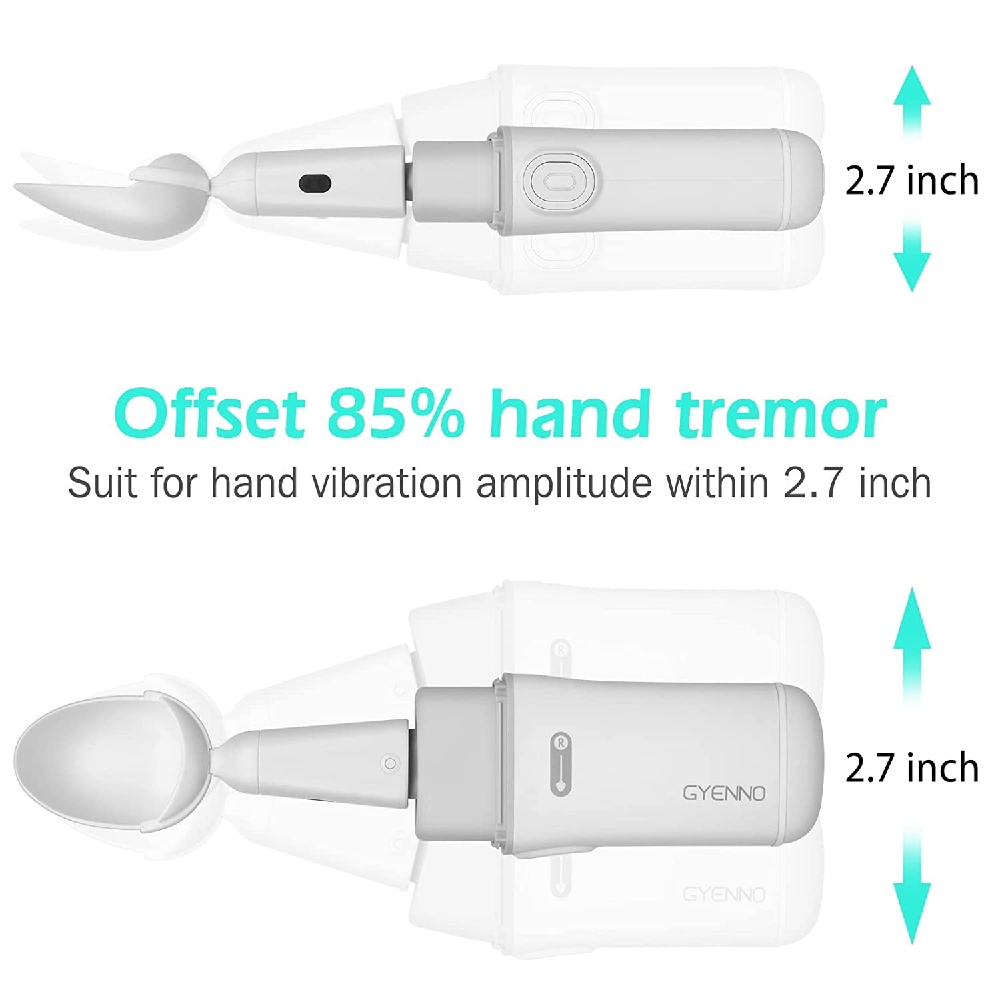
    At the accessible end, a weighted spoon adds mass that dampens mild to moderate tremor through inertia. In the middle sits the swivel spoon: no battery, no electronics, and a rotating head that keeps the bowl level as the hand tilts. At the high end, a motorized stabilizing spoon uses an accelerometer or gyroscopic sensor to detect and oppose shaking in real time, suited to severe Parkinson's disease or essential tremor. 

    The Gyenno Bravo Twist: A Motorized Adaptive Spoon for Tremors

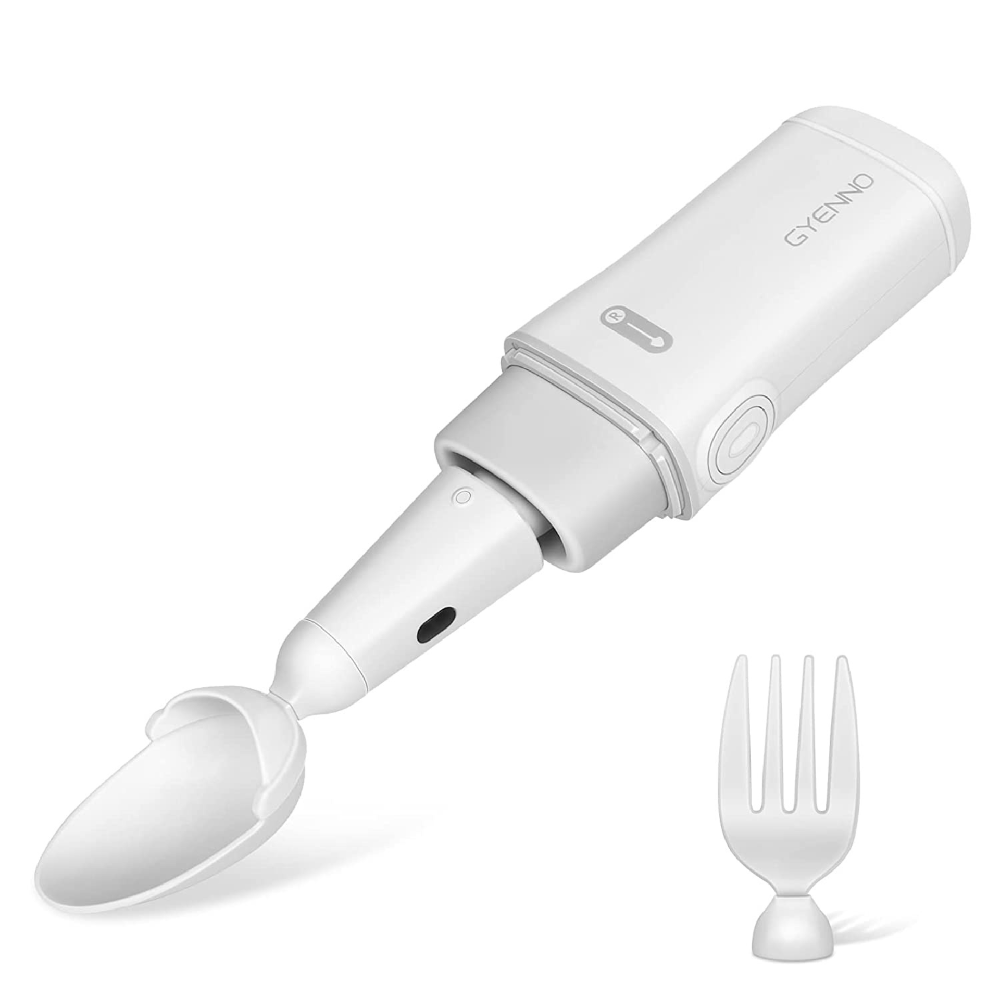
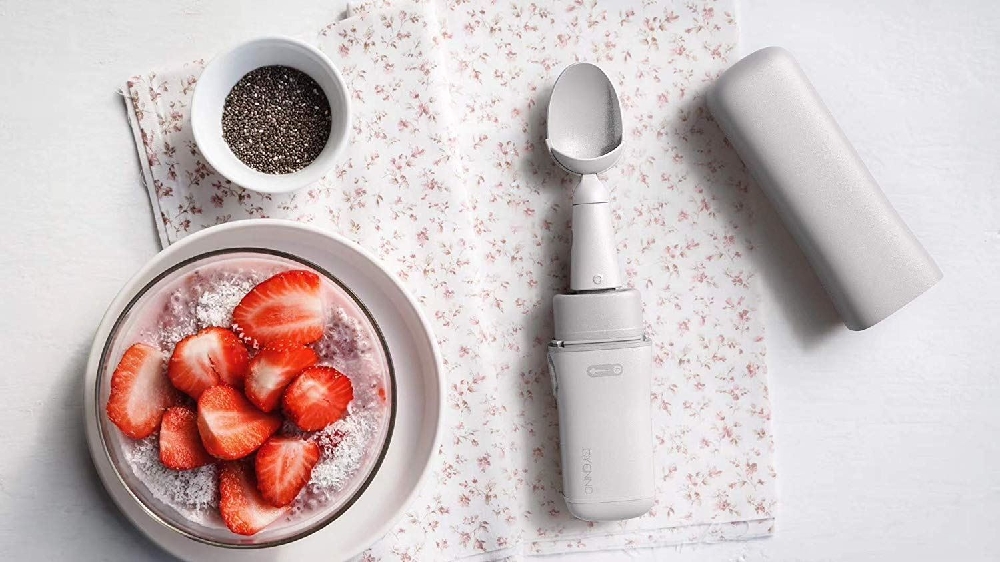
    For older adults whose tremor is no longer controlled by weighted utensils, the Gyenno Bravo Twist Tremor-Stabilizing Spoon is a motorized adaptive spoon available through Pisces Innovation. It detects hand tremor in real time and counteracts the movement, and its product documentation states it can meaningfully reduce shake compared to a standard utensil. It is built with medical-grade materials and is designed to help users track tremor patterns over time. It suits Parkinson's disease, essential tremor, Huntington's disease, and multiple sclerosis; pacemaker users should consult their physician first.

    Adaptive Dinnerware That Works Alongside Adaptive Utensils

    Adaptive utensils work best when paired with compatible dinnerware. A weighted spoon steadies a tremor, but helps less when the plate slides on every scoop, so a non-slip mat or suction base anchors the dish. A plate guard, scoop plate, or high-sided bowl lets a user push food onto a spoon one-handed, which matters after a stroke. Adaptive drinkware ranges from two-handled weighted mugs to a nosey cup that allows drinking without tilting the head back.

    How to Introduce Adaptive Kitchen Utensils to an Older Adult

    Many older adults resist adaptive equipment at first, often because they associate it with dependency or a loss of their former self. This resistance is normal and does not mean the utensil is wrong for them. A gradual introduction usually works better than swapping the whole cutlery drawer: begin with a single adaptive spoon at breakfast, and allow one to two weeks before judging. Frame the utensil around what it allows, protecting dignity and self-agency.

    Using Adaptive Utensils in Care Homes and Senior Living Settings

    Institutional buyers choosing adaptive kitchen utensils for a care home or senior living facility face concerns families do not: durability across commercial dishwasher cycles, material safety, color-coded sets that help staff identify users, and cost-effectiveness at scale. OTs within senior living programs usually lead the functional assessment, and procurement that includes the OT program works better than bulk purchasing alone. For residents with severe impairment, powered options such as the Neater Eater Robotic Dining System may be worth assessing.

    Conclusion

    The right adaptive kitchen utensils and adaptive silverware match a specific physical barrier, whether tremor, grip weakness, or limited range of motion, rather than a general difficulty with eating. Identify the biggest barrier first, choose the utensil type that addresses it, and trial a single piece before buying a full set. For complex or changing needs, an occupational therapist can guide the choice, and motorized options exist when weight alone no longer controls tremor.

    About Pisces Innovation

    Pisces Innovation is the exclusive authorized US distributor of assistive devices for eating, drinking, and tremor management, including the Steadi-3 Plus Anti-Tremor Glove and Neater eating and drinking devices, and has served VA hospitals nationwide for over 15 years. If you are exploring options, our team is here to talk it through.

    Frequently Asked Questions

    Yes, for mild to moderate tremors. The added mass dampens shaking through inertia, so a wobbling hand delivers food more steadily than with a lightweight fork or spoon. The heavier the piece, the more it steadies a stronger tremor, up to the point where weight starts to tire the hand, so match weight to the hand's strength as well as its tremor. For severe tremor, motorized stabilizing spoons counteract movement in real time. An occupational therapist can confirm the right type.

    They solve different problems. Weighted utensils add mass to dampen tremor through inertia. Built-up handle utensils are thicker, offering a wider grip surface that needs much less hand-closing force without adding significant weight. Choose weighted for tremor, built-up handles for weak grip or arthritis, and a set that combines both when a person has both, as with Parkinson's disease. If in doubt, the built-up handle set is the lower-risk starting point for a frail hand because it adds less fatigue.

    Watch what goes wrong at meals. Food falling off the spoon from shaking points to weighted or swivel utensils. Difficulty gripping a thin handle points to built-up foam handles. Difficulty reaching the mouth without painful wrist rotation points to angled or bendable designs. Unpredictable movement from advanced Parkinson's, dementia, or cerebral palsy points to a self-leveling swivel utensil. If the choice stays unclear, or difficulty changes suddenly, consult an occupational therapist.

    Insurance and VA benefits may cover some adaptive eating equipment recommended by a therapist, who can also support the funding justification. Veterans should contact their VA benefits coordinator with a clinical recommendation from their OT. Insurance prior authorization typically requires OT documentation of medical necessity, including functional assessment findings and justification for the powered tier over lower-cost adaptive options.

    Most weighted and foam-handled adaptive utensils are dishwasher-safe, though the top rack and a gentle cycle preserve foam grips better than high-heat programs that compress or degrade the material over time. Swivel utensils with rotating mechanisms are generally best hand-washed to protect the pivot joint. Bendable utensils with metal shafts usually tolerate dishwasher cycles but should be inspected for metal stress at the bend point. Check the manufacturer's care instructions before the first wash.

    Starting with a single adaptive spoon is the lowest-risk approach when an older adult is new to adaptive utensils or resistant to change. The spoon is the least mechanically demanding piece to control and the easiest to test at breakfast without disrupting the whole routine.

    0 Adaptive Eating Equipment: A Guide to Powered Eating and Drinking Devices

    TL;DR

    • Adaptive eating equipment lets people with severe upper-limb impairment eat and drink on their own.
    • Powered devices perform the feeding or drinking action; the user controls each step.
    • Candidates can chew and swallow but cannot bring food or a cup to their mouth.
    • Control interface selection is an OT-led assistive technology assessment, not a product choice.

    Powered adaptive eating equipment exists for people who cannot use their arms or hands to bring food or drink to their mouth, a situation where every meal otherwise depends on another person. This guide covers powered and robotic eating and drinking devices, how they work, and who they suit. They let people eat and drink on their own schedule, at their own pace.

    What Makes a Powered Eating or Drinking Device Different?

    Manual adaptive equipment, such as weighted utensils, arm supports, and bendable-neck spoons, still requires the user to move the utensil toward their mouth. A powered feeding device removes that requirement by performing the mechanical action automatically. The functional threshold differs: the user must operate a control interface (adaptive switch, touchscreen, or voice command) and be able to chew and swallow, but needs no arm or hand movement. For many people with ALS, quadriplegia, or severe cerebral palsy, this is the tier that matches their function.

    Who Are Powered Eating and Drinking Devices For?

    Candidates can chew and swallow and have head control but cannot bring a utensil or cup to their mouth. Powered eating devices are most commonly indicated for ALS and MND, quadriplegia and high cervical spinal cord injury, severe cerebral palsy, muscular dystrophy, and multiple sclerosis with upper-limb involvement. Powered drinking devices serve an overlapping group who can control a switch but cannot hold a cup, including spinal cord injury, post-CVA hemiplegia, upper limb loss, and advanced Parkinson's disease. With significant dysphagia, a clinician should assess swallowing safety first.

    How Robotic Eating Devices Work

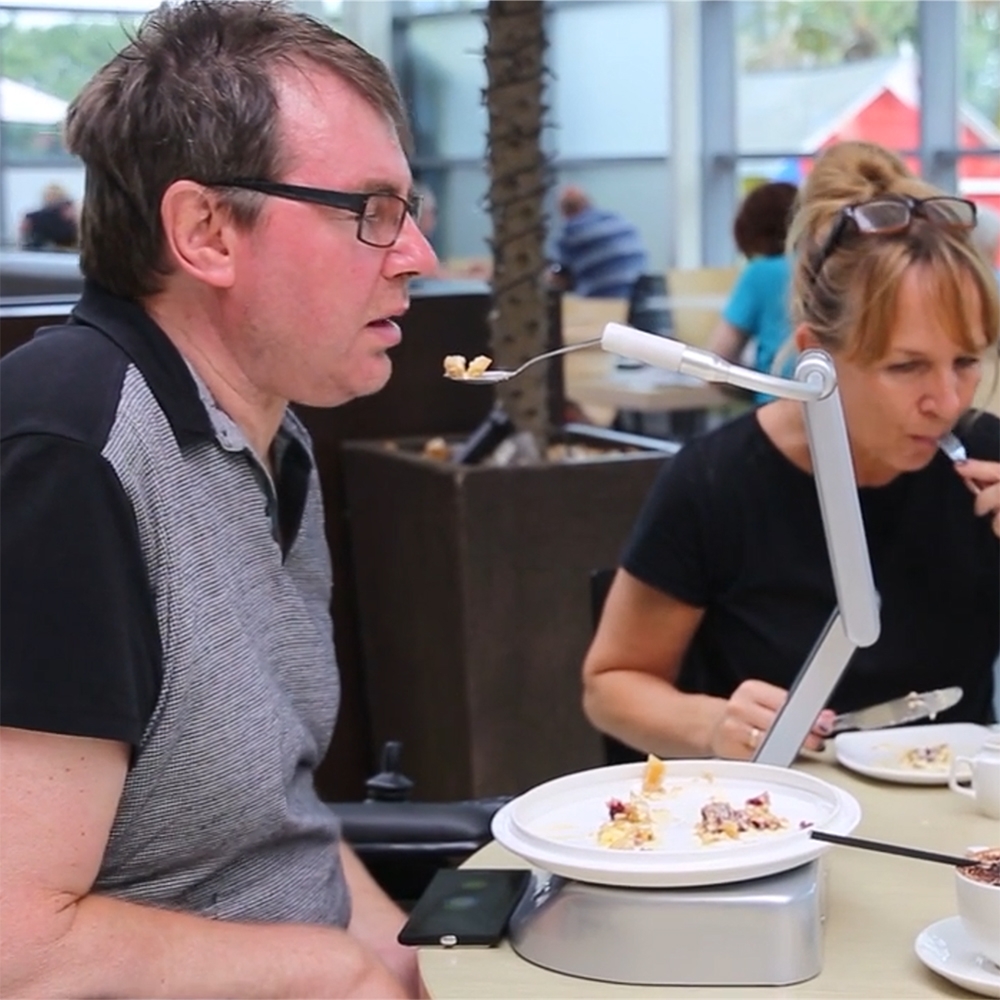
    The device follows a fixed sequence: plate rotation to the chosen compartment, a controlled scooping mechanism, bite delivery near the mouth, and, in some models, spoon wiping. The user activates each step at their own pace through their chosen interface: touchscreen control, switch access (hand, head, foot, or sip-and-puff), or voice control. Control and pace stay with the person throughout the meal.

    How Powered Drinking Devices Work

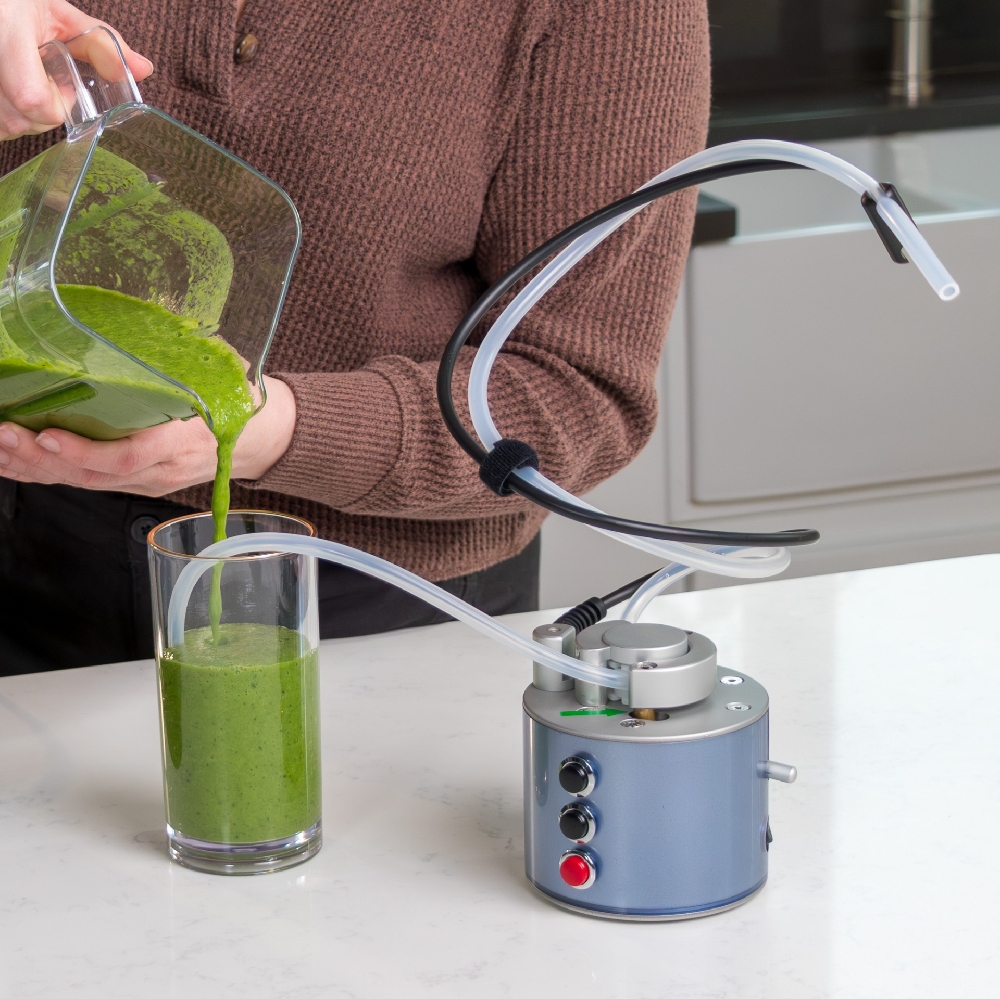
    A powered drinking device uses a peristaltic pump to draw liquid from a reservoir and deliver a controlled amount through a mouthpiece or drinking tube, activated by a single switch. The person does not suck, tilt, or hold anything, and each activation gives a consistent volume. The flow rate and volume can be adjusted to match swallowing speed and capacity. Prerequisites are head control to position for drinking and confirmed swallowing ability for the liquid type, with a swallowing safety assessment recommended before use.

    Control Interfaces: Matching the Device to the Person's Ability

    The interface matters as much as the device, because it only helps if the person can operate it reliably. Common options include:

    • Touchscreen tablets, which need sufficient finger or hand movement
    • Single or dual adaptive switches, activated by hand, elbow, head, chin, knee, or foot
    • Voice command technology 

    Interface selection is part of an assistive technology (AT) assessment by an OT or AT specialist. For progressive conditions like ALS, plan ahead, since many devices support multiple input options.

    Setting Up and Using Powered Eating Devices Day to Day

    Food must be prepared in suitable textures and portion sizes; food that is too liquid or too firm may not transfer consistently, so OTs advise on consistency during training. A caregiver usually handles setup before the meal: loading compartments, positioning the device at the right height, and charging it. Cleaning the bowl and utensil parts is a daily task. Portability is a real benefit, since battery-operated devices work at a table or alongside a wheelchair.

    What to Expect When Transitioning to a Powered Eating Device

    Most people need a short adjustment period: learning the control interface, getting comfortable with the pacing, and building setup and cleanup into the routine. Many people become confident with regular use within days to a few weeks, especially with specialist support. The caregiver role shifts from physical feeding to setup and supervision, which is its own adjustment. The dignity dimension matters too: choosing what to eat and when carries value beyond function.

    Powered Eating and Drinking Devices From Pisces Innovation

    Pisces Innovation is the exclusive authorized US distributor of the Neater Eater Robotic Dining System and the Neater Powered Drinker. The robotic system works via touchscreen, switch, voice control, performing scooping, plate rotation, and spoon wiping for people with ALS, MND, multiple sclerosis, cerebral palsy, and quadriplegia. The switch-operated, peristaltic-pump drinker serves people with ALS, spinal cord injury, post-CVA hemiplegia, traumatic brain injury, upper limb loss, and Parkinson's disease. Having served VA hospitals for over 15 years, Pisces Innovation supports both individual and institutional procurement needs.

    How Powered Eating Devices Support Caregiver Wellbeing

    For caregivers who assist with three meals a day, assisted feeding is among the most time-intensive parts of care, so a device that restores independence directly reduces that burden. The change is practical, in hours freed each day, and emotional, because the relationship shifts when a caregiver no longer physically feeds a loved one. Reduced staff mealtime assistance is often seen as a benefit in institutional settings. Caregivers should be involved in device introduction, since their comfort with setup matters.

    The Role of the Occupational Therapist in Powered Device Selection

    An occupational therapist assessing someone for a powered eating or drinking device evaluates upper-limb function, head and neck control, seating and positioning, swallowing safety (with a speech and language therapist where relevant), and the ability to learn a new interface. A switch access trial identifies the most reliable, fatigue-resistant control method. OTs also produce the documentation that supports funding applications for higher-cost devices, and in facilities they lead staff training.

    Practical Questions Before Choosing a Powered Eating or Drinking Device

    A few questions clarify whether a powered device is the right next step:

    • Has an OT confirmed a powered device is appropriate? That assessment should come first.
    • Is a supervised trial available through a lending library or clinic?
    • What foods and textures does the person eat? Confirming food compatibility with their typical diet prevents frustration.

    For progressive conditions, plan ahead so the device is ready before independence is lost.

    Conclusion

    Powered and robotic eating and drinking devices restore genuine mealtime independence for people whose upper-limb impairment puts manual adaptive equipment out of reach. This is adaptive eating equipment designed for the most significant levels of physical need. The right device depends on an accurate assessment of the person's function, their control interface options, and the tasks the device must perform, which is why the OT pathway matters.

    About Pisces Innovation

    Pisces Innovation is the exclusive authorized US distributor of assistive devices for eating, drinking, and tremor management, including the Steadi-3 Plus Anti-Tremor Glove and Neater eating and drinking devices, and has served VA hospitals nationwide for over 15 years. If you are exploring options, our team is here to talk it through.

    Frequently Asked Questions

    The primary candidates are people who can chew and swallow but cannot bring food to their mouth using their own arm or hand movement. Conditions most commonly associated with these assistive devices for eating include ALS and MND, high cervical spinal cord injury, quadriplegia and tetraplegia, severe cerebral palsy, muscular dystrophy, and multiple sclerosis with significant upper-limb involvement. An OT assessment confirms whether powered adaptive eating equipment is the correct device tier.

    A manual feeding device requires the user to actively direct a utensil toward their mouth; it compensates for a specific deficit but does not perform the feeding action. A powered eating device performs the full sequence: selecting food, scooping, and delivering it to the user, who activates each step through a control interface without any physical feeding movement. A person who benefits from a manual device does not yet need a powered one, while someone who cannot direct any arm movement toward food requires the powered tier.

    Yes. Powered eating and drinking devices are designed primarily for home use, operating on rechargeable batteries with no fixed power connection needed during a meal. Many models are compact and table-mounted, and some can be used alongside a power wheelchair. Daily setup and food loading is handled by a caregiver or family member, while the user operates the device independently during the meal itself.

    Powered eating and drinking devices may be covered under VA benefits as assistive technology or prosthetics and sensory aids; veterans should contact their VA benefits coordinator with a clinical recommendation from their OT. Insurance prior authorization typically requires OT documentation of medical necessity, including functional assessment findings and justification for the powered tier over lower-cost adaptive options.

    Most robotic eating devices handle foods that can be scooped with a spoon, including soft proteins, cooked vegetables, pasta, rice, casseroles, fruit, and soft desserts. Very liquid foods such as soups or loose sauces, and very firm foods that require cutting, are typically not compatible with standard scooping mechanisms and may spill or transfer inconsistently. Food preparation, such as cutting proteins into appropriate pieces and avoiding foods that do not hold their shape on a spoon, is part of the practical training clinicians provide during device introduction.

    Most users move from initial unfamiliarity to confident independent use within days to a few weeks of regular practice, particularly when an OT or AT specialist is involved in the introduction. The steepest part of the learning curve is usually the control interface: learning the timing of switch activation, the pace of the device, and building trust that it will deliver food consistently. People with progressive conditions may need periodic reassessment as their most reliable control movement changes, and the interface may be reconfigured.

    0 Assistive Devices for Eating: Robotic, Powered, and Manual Options Compared

    TL;DR

    • Assistive devices for eating fall into three tiers: manual adaptive, arm support, and robotic.
    • The right tier depends on the specific physical barrier, not the diagnosis label.
    • Manual devices suit retained but impaired hand function; robotic devices suit those who cannot direct a utensil.
    • An occupational therapist assessment is the most reliable way to match a device to function.

    Assistive devices for eating range from simple adapted utensils to robotic systems, and the first question families and clinicians ask is which type fits a given level of function. The choice shapes dignity, nutrition, and social connection at every shared meal. The answer depends on a person's specific physical abilities, not on any one device being universally better.

    What Are Assistive Devices for Eating?

    These devices span a broad spectrum, from adapted utensils and dinnerware at the low-tech end through fully powered robotic systems at the high-tech end. The shared goal is to let someone who struggles with standard utensils eat independently, with less caregiver assistance, or with greater safety. This article organizes the field into three categories: manual/adaptive, arm support, and robotic. Occupational therapy is the clinical framework for matching a device to need. Four situations most commonly drive that need: tremor, upper-limb weakness, paralysis or quadriplegia, and impaired coordination.

    How an Occupational Therapist Assesses Device Fit

    No single device fits every patient with the same diagnosis, so an occupational therapist first identifies which physical deficits actually limit independence at mealtimes. A feeding evaluation typically reviews upper-limb strength and range of motion, tremor severity and type, seated posture, swallowing safety, and the ability to operate a control interface such as a switch, touchscreen, or voice command. Requesting a feeding-specific clinical assessment before purchase matters most for powered or robotic systems, often alongside a multidisciplinary team.

    Manual and Adaptive Eating Devices: When Hand Function Remains

    Manual adaptive equipment suits people who retain active arm and hand movement: the user brings food to the mouth while the device compensates for one deficit. Weighted utensils add mass and proprioceptive feedback to dampen mild-to-moderate tremor. Built-up handle utensils give a wider grip surface for weak grip strength or arthritis. Swivel and bendable-neck utensils keep the bowl level when wrist rotation is limited. Match the sub-type to the deficit, not the diagnosis: two people with Parkinson's disease may need different tools.

    Arm Support Devices: When Muscles Are Weak But Control Remains

    Arm support devices serve a distinct group: people who retain enough hand coordination to hold and direct a utensil, but whose shoulder and elbow muscles are too weak to lift the arm against gravity. A counterbalanced arm support uses a spring or fluid-damped mechanism, not electricity, to float the forearm. This zero-gravity effect frees effort for fine hand movement. Target conditions include ALS, muscular dystrophy, spinal cord injury, post-CVA hemiparesis, and multiple sclerosis with proximal upper-limb weakness.

    Robotic Eating Devices: For Those Who Cannot Direct a Utensil

    A robotic dining system performs all the mechanical work of feeding: scooping, rotating the plate, and delivering the spoon to the mouth. Control interfaces vary by model and ability, including touchscreen control, single or multiple switch access, voice control, and eye-gaze control. The target population can chew and swallow but cannot direct arm or hand movement toward a utensil, such as those with ALS, MND, high-level spinal cord injury, quadriplegia, or severe cerebral palsy. The user must retain the cognitive function to operate the interface.

    What Conditions Benefit From Adaptive Eating Equipment?

    Organizing conditions by functional profile clarifies which tier fits best:

    • Tremor-driven (manual adaptive tier): Parkinson's disease, essential tremor, multiple sclerosis with tremor, and traumatic brain injury with ataxia.
    • Weakness-driven (arm support tier): ALS at moderate progression, muscular dystrophy, post-CVA hemiparesis, and spinal cord injury with partial hand function.
    • Paralysis-driven (robotic tier): high cervical spinal cord injury, quadriplegia, advanced ALS, and severe cerebral palsy, where no functional arm movement remains.

    Conditions progress, so re-assessment is part of ongoing management.

    Adaptive Eating Equipment Costs, Funding, and Access

    Cost varies widely. Basic adaptive utensils and plate guards are the most affordable entry point, arm supports and manual self-feeding devices sit in the mid-range, and robotic dining systems represent a significant investment. Insurance and VA benefits may cover some adaptive eating equipment recommended by a therapist, who can also support the funding justification.

    Assistive Eating and Drinking Devices From Pisces Innovation

    Pisces Innovation is the exclusive authorized US distributor of the Neater devices described in this guide: the Neater Eater Manual, the Neater Arm Support ZERO, the Neater Eater Robotic Dining System, and the Neater Powered Drinker. Together they span the manual, arm support, and robotic tiers, plus powered drinking. Pisces Innovation has served VA hospitals nationwide for over 15 years and welcomes institutional and clinical procurement inquiries.

    Key Differences Between Manual, Powered, and Robotic Eating Devices

    The clearest way to compare tiers is by the function a person must retain to use each one.


    TierPatient must retainDevice handlesBest for
    Manual adaptiveGrip (with or without a cuff), arm lift, reach to mouthOne deficit: tremor, grip, or range of motionHome use; most portable
    Arm supportHand and wrist coordinationLifting the arm against gravityHome or clinical settings
    Robotic systemControl interface operation; chew and swallowAll physical feeding mechanicsHigher care needs; more maintenance

    Adaptive Eating Devices for Institutional and Care-Home Settings

    In residential care and hospital settings, adaptive eating devices add a staff efficiency dimension. Assisted feeding is time-intensive, so devices that restore independence reduce direct care time per meal. OTs and procurement managers should review each product's documentation for staff-time and cost-recovery details. Some adaptive eating and drinking devices may be available through federal procurement channels relevant to VA hospitals, and product pages include documentation that can support funding applications.

    Conclusion

    The right assistive devices for eating depend on which physical barrier, whether tremor, muscle weakness, or paralysis, is preventing independence at mealtimes. Manual adaptive equipment suits retained but impaired hand function, arm supports suit weakness without loss of hand coordination, and robotic systems suit people who cannot direct a utensil. An occupational therapist assessment remains the most reliable way to match a device to a person's function and to plan for changes over time.

    About Pisces Innovation

    Pisces Innovation is the exclusive authorized US distributor of assistive devices for eating, drinking, and tremor management, including the Steadi-3 Plus Anti-Tremor Glove and Neater Eater Manual, the Neater Arm Support ZERO, the Neater Eater Robotic Dining System, and the Neater Powered Drinker. Pisces has served VA hospitals nationwide for over 15 years. If you are exploring options, our team is here to talk it through.

    Frequently Asked Questions

    The right choice depends on the specific challenge limiting independence, not on the diagnosis alone. For tremor or shaking, weighted utensils help, with motorized stabilizing utensils for more severe cases. For weak grip or arthritis, built-up handle utensils reduce the hand force required. For limited wrist range of motion, swivel or bendable-neck utensils keep the bowl level regardless of hand angle. After a stroke or amputation, rocker-style knives and plate stabilization aids support one-handed use. When in doubt, an OT assessment identifies the right category before purchase.

    A wide range of neurological and musculoskeletal conditions benefit, including Parkinson's disease, essential tremor, ALS, multiple sclerosis, cerebral palsy, spinal cord injury, post-stroke hemiparesis, muscular dystrophy, rheumatoid arthritis, and traumatic brain injury. The relevant device tier depends on the functional profile, whether the need is tremor-driven, weakness-driven, or paralysis-driven. Children with motor development delays and adults recovering from surgery or injury also benefit. An occupational therapist can assess which device tier suits a specific patient's functional profile.

    A manual feeding device requires the user to direct the utensil to their mouth using their own arm and hand movement. A robotic eating device performs the mechanical feeding actions instead, scooping, rotating the plate, and delivering food to the mouth, leaving only control interface operation such as a switch, touchscreen, or voice to the user. Manual devices suit impaired hand function with retained arm movement; robotic devices serve those who cannot direct any limb toward a utensil.

    Insurance and VA benefits may cover some adaptive eating equipment recommended by a therapist, who can also support the funding justification. Veterans should contact their VA benefits coordinator with a clinical recommendation from their OT. Insurance prior authorization typically requires OT documentation of medical necessity, including functional assessment findings and justification for the powered tier over lower-cost adaptive options.

    An arm support device is appropriate when a person retains hand and wrist coordination but cannot lift the arm against gravity. A robotic eating device is appropriate when arm, wrist, and hand function are all too limited to direct a utensil; the user operates a control interface such as a switch, touchscreen, voice, or eye-gaze while the device handles all physical feeding mechanics. An OT assessment reliably identifies which threshold a patient sits at and helps plan for progression.

    Yes. Adaptive eating devices are widely used in residential care, rehabilitation, and hospital settings, where they serve both patient independence and staff efficiency goals. For care homes, devices that restore self-feeding reduce direct staff assistance time per meal, which can represent meaningful cost and staffing benefits over time. For VA hospitals and other federal facilities, some adaptive eating and drinking devices are available through government contract procurement pathways. Institutional OTs and procurement teams should review clinical outcome data and available funding mechanisms before selecting devices for facility-wide use.

    0 Gloves for Parkinson's Tremor: What to Know Before You Buy

    TL;DR

    • A Parkinson's glove covers three product types: passive weighted, active mechanical, and experimental sensor or vibrotactile.
    • Gloves work best against action tremor, less so against resting tremor.
    • The right choice depends on tremor type, severity, and disease stage.
    • Talk to a movement disorder neurologist before buying any device.
    • Gloves complement medication and therapy; they do not replace them.

    A Parkinson's glove is one of the first things people search for when tremor makes it hard to eat, drink, write, or button a shirt, but the term covers very different products. This article explains what it actually means, which technologies exist, what the evidence says, and what to discuss with a neurologist before buying.

    How Parkinson's Disease Causes Tremor

    Parkinson's disease develops from the progressive loss of dopamine-producing neurons in the substantia nigra, a brain region that helps coordinate movement. As dopamine declines, the circuits regulating motor control break down, producing the hallmark motor symptoms: tremor, bradykinesia (slowness of movement), and muscle rigidity.

    Tremor is among the most visible and disruptive of these symptoms, though not everyone with Parkinson's experiences it equally. Wearable devices can reduce the visible effects of tremor without addressing the underlying dopamine pathway.

    Resting Tremor vs. Action Tremor: The Distinction That Shapes Every Device Decision

    Resting tremor is the most characteristic tremor of Parkinson's disease. It occurs when the limb is fully supported and at rest, often described as a "pill-rolling" motion of the fingers. Action tremor, also called postural or kinetic tremor, occurs during voluntary movement such as reaching, lifting, eating, or writing.

    This matters for buyers: wearable gloves counteract tremor during motion, so they most directly help action tremor. A movement disorder neurologist can say which type is most disruptive.

    What a "Parkinson's Glove" Actually Means: Three Different Products

    The search term "Parkinson's glove" covers three categories that should not be confused.

    • Passive weighted gloves: add mass to dampen tremor during movement; no battery required.
    • Active stabilization devices: use a tuned mass damper or gyroscope to counteract tremor in real time; some need batteries.

    Passive Weighted Gloves for Parkinson's Tremor

    A weighted Parkinson's glove adds mass to the hand, increasing its inertia so the involuntary tremor signal cannot move the hand through as large an arc. The hand still trembles, but the oscillation is smaller and less disruptive, reducing visible tremor amplitude during tasks. For action tremor during eating, writing, and reaching, this mechanism applies directly.

    The honest limitation: more weight is not always better, because heavier gloves increase fatigue, already a common Parkinson's symptom. Generic fitness gloves are not designed or validated for tremor.

    Active Stabilization Devices: Tuned Mass Dampers and Gyroscopic Technology

    A tuned mass damper (TMD) device embeds a counterbalance that oscillates in opposition to the hand's tremor, generating a mechanical counterforce that reduces tremor amplitude in real time. The TMD principle is battery-free: a weighted component floats within a magnetic or spring field and responds automatically, without power or user adjustment.

    Gyroscopic stabilization uses spinning miniature gyroscopes to resist changes in wrist orientation. These devices need battery power and typically need recharging within the same day, which limits all-day use.

    Vibrotactile Gloves and Sensor Gloves: What the Research Shows

    Sensor-based assessment gloves measure tremor, finger flex, and grip pressure during daily activities, letting a neurologist track symptoms remotely. Research suggests their results are consistent with in-person assessment.

    Vibrotactile gloves deliver controlled vibrations through the fingertips to sensory nerves connected to the thalamus, the brain region whose abnormal oscillation drives Parkinson's motor symptoms. Early-stage research has explored potential improvements in tremor, rigidity, and bradykinesia, though results remain preliminary. Both types remain in clinical trials and are not sold directly to consumers.

    How Gloves Fit Into a Broader Parkinson's Treatment Plan

    For many people, tremor responds well to dopamine-replacement medications such as levodopa, and a glove is supplementary. For medication-resistant tremor, a glove plays a more central role in daily tasks.

    Deep brain stimulation (DBS) and focused ultrasound are procedural options for medication-resistant tremor; a non-invasive glove does not preclude them. Physical therapy supports motor function and balance, while occupational therapy advises on adaptive tools. A movement disorder neurologist is the right person to advise where a glove fits at your current stage.

    A Clinically Tested Tremor Glove for Parkinsonian and Essential Tremor

    The Steadi-3 Plus Anti-Tremor Glove is a purpose-built, battery-free glove for essential tremor or Parkinsonian tremor. In clinical evaluation, the Steadi-3 Plus showed meaningful improvement in tremor control compared to no device, including results from a blinded assessment against placebo. It is an FDA-registered Class I medical device, with a money-back guarantee available within a set return window, subject to the terms listed on the product page. Pisces Innovation is its exclusive authorized US distributor. Full product details and current return terms are available on the product page.

    How Parkinson's Progression Affects Which Glove Will Help

    Parkinson's disease is progressive, so tremor's nature and severity typically change over time. A passive weighted glove or entry-level TMD device may suit mild to moderate tremor.

    As tremor becomes more severe or variable, more active stabilization or adapted equipment may be needed, and fatigue can limit heavier or battery-dependent devices. Regular OT reassessment, on an ongoing basis or after a notable change, keeps the strategy matched to your needs.

    What to Ask Your Movement Disorder Neurologist Before Buying

    Bring these questions to your care team:

    • Which type of tremor do I have, resting, action, or both, and which is most disruptive?
    • Is my current tremor medication optimized? Explore adjustments before investing in a device.
    • Do I have any contraindications? People with DBS implants should avoid electrical stimulation devices, and anyone with a pacemaker or implanted electronic device should check with their doctor before using a magnetic glove.
    • Would an occupational therapy referral help identify the right adaptive tools?
    • Can you document medical necessity for VA claims?

    VA Benefits and Coverage for Parkinson's Gloves

    Parkinson's disease is common among veterans, and some VA-purchased assistive devices may be covered depending on service connection. Pisces Innovation has served VA hospitals for over 15 years and welcomes VA-related inquiries. Private insurance coverage for wearable tremor devices is limited, so check with your insurer first; state Assistive Technology Act programs may offer device trials.

    Conclusion

    The term Parkinson's glove covers three distinct product categories: passive weighted gloves, active mechanical stabilization devices, and experimental sensor or vibrotactile gloves. The right choice depends on tremor type, severity, disease stage, and daily needs. Parkinson's disease gloves are most useful for action tremor during tasks and work best as one part of a plan that includes medication and therapy, guided by a movement disorder neurologist.

    About Pisces Innovation

    Pisces Innovation is the exclusive authorized US distributor of assistive devices for eating, drinking, and tremor management, including the Steadi-3 Plus Anti-Tremor Glove and Neater Eater eating and drinking devices, and has served VA hospitals nationwide for over 15 years. If you are exploring options, our team is here to talk it through.

    Frequently Asked Questions

    A Parkinson's glove is any wearable hand device intended to help manage tremor or other motor symptoms in Parkinson's disease. In current usage it covers three categories: passive weighted gloves that add inertial resistance, active mechanical devices (TMD or gyroscopic) that counteract tremor in real time, and experimental vibrotactile or sensor-based gloves in clinical trials. The commercially available options are passive weighted gloves and active stabilization devices. A movement disorder neurologist can advise which category suits a person's tremor type and severity.

    For many people, yes, particularly for action or postural tremor, the type that occurs during eating, writing, and voluntary movement. Passive weighted gloves reduce tremor amplitude through added inertia, while active TMD and gyroscopic devices provide a mechanical counterforce during movement; both have evidence supporting meaningful benefit for task-related tremor. For resting tremor, the mechanism of most available gloves is less directly applicable, an important distinction before buying. Individual results vary with severity, disease stage, and device.

    Resting tremor occurs when the affected limb is relaxed and fully supported, the classic Parkinson's tremor that appears when the hand is still and often reduces or stops when the person reaches for something. Action tremor, also called postural or kinetic tremor, occurs during voluntary movement such as eating, writing, reaching, or holding a position. Many people experience both to different degrees. Most wearable tremor gloves counteract movement during tasks, so they address action tremor most directly; resting tremor is less responsive.

    Yes. Two types of gloves for Parkinson's disease are in ongoing clinical trials. One uses wireless sensors to measure tremor signals, grip pressure, and finger flex angles, allowing a neurologist to monitor symptoms remotely. A second delivers controlled vibrations through the fingertips, aimed at modulating the brain circuits responsible for tremor; early pilot studies have explored improvements in tremor and other motor symptoms. These devices are not yet available for direct purchase; a neurologist can advise on trial participation.

    Yes. Wearable tremor gloves are intended as a complementary tool alongside pharmacological management, not a replacement. For people whose tremor responds well to dopamine medications like levodopa, a glove provides added support during "off" periods or for residual tremor that persists with medication. For those with medication-resistant tremor, a glove becomes more central to day-to-day management. A movement disorder neurologist should be informed of any wearable device.

    Start with tremor type: if your most disruptive tremor occurs during movement like eating or writing, a weighted or active stabilization device is the most applicable; if resting tremor is the main concern, discuss options with your neurologist, as most devices address action tremor. Consider severity, since mild tremor may suit a passive weighted glove while moderate-to-severe action tremor may respond better to an active TMD or gyroscopic device. An OT evaluation reliably matches a device to your daily profile.