
Assistive Devices for Eating: Robotic, Powered, and Manual Options Compared
TL;DR
- Assistive devices for eating fall into three tiers: manual adaptive, arm support, and robotic.
- The right tier depends on the specific physical barrier, not the diagnosis label.
- Manual devices suit retained but impaired hand function; robotic devices suit those who cannot direct a utensil.
- An occupational therapist assessment is the most reliable way to match a device to function.
Assistive devices for eating range from simple adapted utensils to robotic systems, and the first question families and clinicians ask is which type fits a given level of function. The choice shapes dignity, nutrition, and social connection at every shared meal. The answer depends on a person's specific physical abilities, not on any one device being universally better.
What Are Assistive Devices for Eating?
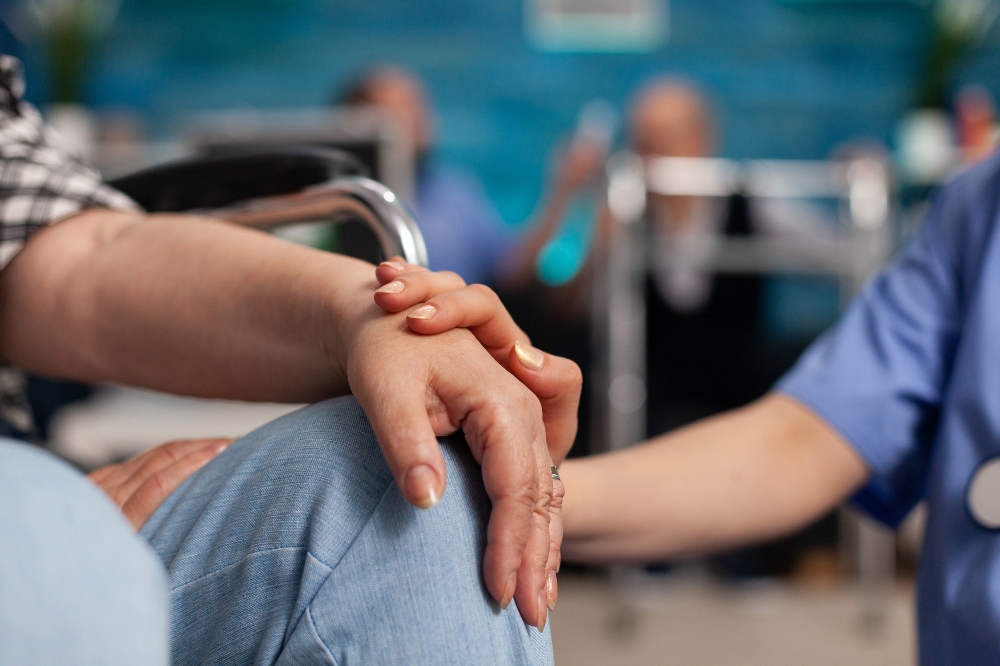
These devices span a broad spectrum, from adapted utensils and dinnerware at the low-tech end through fully powered robotic systems at the high-tech end. The shared goal is to let someone who struggles with standard utensils eat independently, with less caregiver assistance, or with greater safety. This article organizes the field into three categories: manual/adaptive, arm support, and robotic. Occupational therapy is the clinical framework for matching a device to need. Four situations most commonly drive that need: tremor, upper-limb weakness, paralysis or quadriplegia, and impaired coordination.
How an Occupational Therapist Assesses Device Fit
No single device fits every patient with the same diagnosis, so an occupational therapist first identifies which physical deficits actually limit independence at mealtimes. A feeding evaluation typically reviews upper-limb strength and range of motion, tremor severity and type, seated posture, swallowing safety, and the ability to operate a control interface such as a switch, touchscreen, or voice command. Requesting a feeding-specific clinical assessment before purchase matters most for powered or robotic systems, often alongside a multidisciplinary team.
Manual and Adaptive Eating Devices: When Hand Function Remains
Manual adaptive equipment suits people who retain active arm and hand movement: the user brings food to the mouth while the device compensates for one deficit. Weighted utensils add mass and proprioceptive feedback to dampen mild-to-moderate tremor. Built-up handle utensils give a wider grip surface for weak grip strength or arthritis. Swivel and bendable-neck utensils keep the bowl level when wrist rotation is limited. Match the sub-type to the deficit, not the diagnosis: two people with Parkinson's disease may need different tools.
Arm Support Devices: When Muscles Are Weak But Control Remains
Arm support devices serve a distinct group: people who retain enough hand coordination to hold and direct a utensil, but whose shoulder and elbow muscles are too weak to lift the arm against gravity. A counterbalanced arm support uses a spring or fluid-damped mechanism, not electricity, to float the forearm. This zero-gravity effect frees effort for fine hand movement. Target conditions include ALS, muscular dystrophy, spinal cord injury, post-CVA hemiparesis, and multiple sclerosis with proximal upper-limb weakness.
Robotic Eating Devices: For Those Who Cannot Direct a Utensil
A robotic dining system performs all the mechanical work of feeding: scooping, rotating the plate, and delivering the spoon to the mouth. Control interfaces vary by model and ability, including touchscreen control, single or multiple switch access, voice control, and eye-gaze control. The target population can chew and swallow but cannot direct arm or hand movement toward a utensil, such as those with ALS, MND, high-level spinal cord injury, quadriplegia, or severe cerebral palsy. The user must retain the cognitive function to operate the interface.
What Conditions Benefit From Adaptive Eating Equipment?
Organizing conditions by functional profile clarifies which tier fits best:
- Tremor-driven (manual adaptive tier): Parkinson's disease, essential tremor, multiple sclerosis with tremor, and traumatic brain injury with ataxia.
- Weakness-driven (arm support tier): ALS at moderate progression, muscular dystrophy, post-CVA hemiparesis, and spinal cord injury with partial hand function.
- Paralysis-driven (robotic tier): high cervical spinal cord injury, quadriplegia, advanced ALS, and severe cerebral palsy, where no functional arm movement remains.
Conditions progress, so re-assessment is part of ongoing management.
Adaptive Eating Equipment Costs, Funding, and Access

Cost varies widely. Basic adaptive utensils and plate guards are the most affordable entry point, arm supports and manual self-feeding devices sit in the mid-range, and robotic dining systems represent a significant investment. Insurance and VA benefits may cover some adaptive eating equipment recommended by a therapist, who can also support the funding justification.
Assistive Eating and Drinking Devices From Pisces Innovation
Pisces Innovation is the exclusive authorized US distributor of the Neater devices described in this guide: the Neater Eater Manual, the Neater Arm Support ZERO, the Neater Eater Robotic Dining System, and the Neater Powered Drinker. Together they span the manual, arm support, and robotic tiers, plus powered drinking. Pisces Innovation has served VA hospitals nationwide for over 15 years and welcomes institutional and clinical procurement inquiries.
Key Differences Between Manual, Powered, and Robotic Eating Devices
The clearest way to compare tiers is by the function a person must retain to use each one.
| Tier | Patient must retain | Device handles | Best for |
|---|---|---|---|
| Manual adaptive | Grip (with or without a cuff), arm lift, reach to mouth | One deficit: tremor, grip, or range of motion | Home use; most portable |
| Arm support | Hand and wrist coordination | Lifting the arm against gravity | Home or clinical settings |
| Robotic system | Control interface operation; chew and swallow | All physical feeding mechanics | Higher care needs; more maintenance |
Adaptive Eating Devices for Institutional and Care-Home Settings
In residential care and hospital settings, adaptive eating devices add a staff efficiency dimension. Assisted feeding is time-intensive, so devices that restore independence reduce direct care time per meal. OTs and procurement managers should review each product's documentation for staff-time and cost-recovery details. Some adaptive eating and drinking devices may be available through federal procurement channels relevant to VA hospitals, and product pages include documentation that can support funding applications.
How to Choose the Right Adaptive Eating Device
For mild tremor or weak grip, a basic set of adaptive utensils for adults is a reasonable first step, and low cost allows a trial before moving up. For moderate to severe difficulty, an occupational therapist assessment is the most reliable path, because spilling can stem from tremor, grip failure, or limited range of motion. For severe upper-limb impairment, involve the clinical team, since the decision affects care planning, staffing, and funding. Ask about trial periods and return policies.
Conclusion
The right assistive devices for eating depend on which physical barrier, whether tremor, muscle weakness, or paralysis, is preventing independence at mealtimes. Manual adaptive equipment suits retained but impaired hand function, arm supports suit weakness without loss of hand coordination, and robotic systems suit people who cannot direct a utensil. An occupational therapist assessment remains the most reliable way to match a device to a person's function and to plan for changes over time.
About Pisces Innovation

Pisces Innovation is the exclusive authorized US distributor of assistive devices for eating, drinking, and tremor management, including the Steadi-3 Plus Anti-Tremor Glove and Neater Eater Manual, the Neater Arm Support ZERO, the Neater Eater Robotic Dining System, and the Neater Powered Drinker. Pisces has served VA hospitals nationwide for over 15 years. If you are exploring options, our team is here to talk it through. The right choice depends on the specific challenge limiting independence, not on the diagnosis alone. For tremor or shaking, weighted utensils help, with motorized stabilizing utensils for more severe cases. For weak grip or arthritis, built-up handle utensils reduce the hand force required. For limited wrist range of motion, swivel or bendable-neck utensils keep the bowl level regardless of hand angle. After a stroke or amputation, rocker-style knives and plate stabilization aids support one-handed use. When in doubt, an OT assessment identifies the right category before purchase. A wide range of neurological and musculoskeletal conditions benefit, including Parkinson's disease, essential tremor, ALS, multiple sclerosis, cerebral palsy, spinal cord injury, post-stroke hemiparesis, muscular dystrophy, rheumatoid arthritis, and traumatic brain injury. The relevant device tier depends on the functional profile, whether the need is tremor-driven, weakness-driven, or paralysis-driven. Children with motor development delays and adults recovering from surgery or injury also benefit. An occupational therapist can assess which device tier suits a specific patient's functional profile. A manual feeding device requires the user to direct the utensil to their mouth using their own arm and hand movement. A robotic eating device performs the mechanical feeding actions instead, scooping, rotating the plate, and delivering food to the mouth, leaving only control interface operation such as a switch, touchscreen, or voice to the user. Manual devices suit impaired hand function with retained arm movement; robotic devices serve those who cannot direct any limb toward a utensil. Insurance and VA benefits may cover some adaptive eating equipment recommended by a therapist, who can also support the funding justification. Veterans should contact their VA benefits coordinator with a clinical recommendation from their OT. Insurance prior authorization typically requires OT documentation of medical necessity, including functional assessment findings and justification for the powered tier over lower-cost adaptive options. An arm support device is appropriate when a person retains hand and wrist coordination but cannot lift the arm against gravity. A robotic eating device is appropriate when arm, wrist, and hand function are all too limited to direct a utensil; the user operates a control interface such as a switch, touchscreen, voice, or eye-gaze while the device handles all physical feeding mechanics. An OT assessment reliably identifies which threshold a patient sits at and helps plan for progression. Yes. Adaptive eating devices are widely used in residential care, rehabilitation, and hospital settings, where they serve both patient independence and staff efficiency goals. For care homes, devices that restore self-feeding reduce direct staff assistance time per meal, which can represent meaningful cost and staffing benefits over time. For VA hospitals and other federal facilities, some adaptive eating and drinking devices are available through government contract procurement pathways. Institutional OTs and procurement teams should review clinical outcome data and available funding mechanisms before selecting devices for facility-wide use.Frequently Asked Questions