
Essential Hand Tremor: Symptoms, Causes, and When to See a Doctor
TL;DR
- Essential hand tremor is the most common movement disorder, worst during movement.
- It differs from Parkinson's disease, which produces tremor mostly at rest.
- Roughly 50% of cases are hereditary, following autosomal dominant inheritance.
- Caffeine, stress, and fatigue can worsen tremor severity day to day.
- It is not curable, but medication, devices, and lifestyle changes help.
For many people, essential hand tremor first becomes noticeable during a routine task such as writing, holding a cup, or buttoning a shirt. It is the most common movement disorder, affecting roughly 1% of people worldwide and about 5% of people over 60. This article covers what it is, why it happens, how it is recognized, and when to see a doctor.
What Essential Hand Tremor Is

Essential hand tremor is a movement disorder that produces involuntary rhythmic shaking in the hands and arms. The shaking is an action tremor and a postural tremor, meaning it appears when the hand is in use or held in a position, not when fully at rest. This distinguishes it from the rest tremor associated with Parkinson's disease. It is not life-threatening and does not affect lifespan, though over time it can progress enough to disrupt eating, writing, and dressing.
The Core Symptoms to Recognize
The main symptom is visible shaking during use: writing, holding utensils, drinking from a cup, or reaching for an object. Tremor usually affects both hands, often more on one side. Over time, it may extend to the head (a rhythmic "yes-yes" or "no-no" motion), voice, jaw, or torso. Frequency typically falls between 4 and 12 cycles per second and tends to slow with age. Shaking eases during complete rest, a key distinguishing feature.
What Causes Essential Tremor
The exact cause is not fully understood. Researchers believe it involves changes in how the cerebellum communicates with other brain areas that coordinate movement. About 50% of cases appear to run in families, which is why essential tremor is sometimes called familial tremor. Even within affected families, age of onset and severity vary widely, and no single causative gene has been identified. In the remaining cases, no clear cause or family link is found.
Why Essential Tremor Is Often Hereditary
When it runs in families, essential tremor typically follows an autosomal dominant inheritance pattern: if one parent carries the genetic variation, each biological child has about a 50% chance of inheriting it. The hereditary link in essential tremor is strong, but inheriting the variation does not guarantee the condition develops, because environmental exposure and individual biology also play a role. Twin studies show this, with one twin developing tremor and the other not. A doctor will ask about family history.
What Makes Essential Hand Tremor Worse
Several everyday factors amplify tremor, and knowing your own essential hand tremor triggers can reduce symptoms without medication.
- Stress, anxiety, and emotional upset increase tremor amplitude through the neurological stress response.
- Caffeine is one of the most consistently cited dietary triggers; reducing it is often a first recommendation.
- Physical fatigue and sleep deprivation raise severity.
- Some medications, including stimulants, certain antidepressants, corticosteroids, and asthma inhalers, can worsen tremor; review them with your physician.
- Blood sugar instability, thyroid fluctuations, and illness can all temporarily worsen tremor.
How Essential Tremor Is Diagnosed
Essential tremor has no single definitive test, so diagnosis is clinical, based on a neurological examination and medical history. A physician assesses muscle tone, reflexes, balance, speech, and the tremor itself: frequency, amplitude, affected side, and whether it occurs at rest or during action. Blood tests often rule out mimicking conditions such as thyroid dysfunction, Wilson's disease, and metabolic problems. Imaging may follow if tremor is one-sided or paired with other symptoms. Ruling out Parkinson's disease is central to the diagnosis.
Essential Tremor vs. Parkinson's Disease
The essential tremor vs Parkinson's disease question worries many patients. The clearest difference is timing.
| Feature | Essential tremor | Parkinson's disease |
|---|---|---|
| Tremor type | Action tremor, worst during movement | Rest tremor, worst when still |
| Symmetry | Usually both hands, one side often worse | Asymmetric, one side dominant |
| Other symptoms | Head or voice tremor possible | Slowness, rigidity, gait changes |
| Handwriting | Shaky, not shrinking | Micrographia (shrinking) |
Both can run in families, but essential tremor does so far more consistently. Any stiffness or slowness warrants a physician's assessment.
Managing Essential Hand Tremor Day to Day
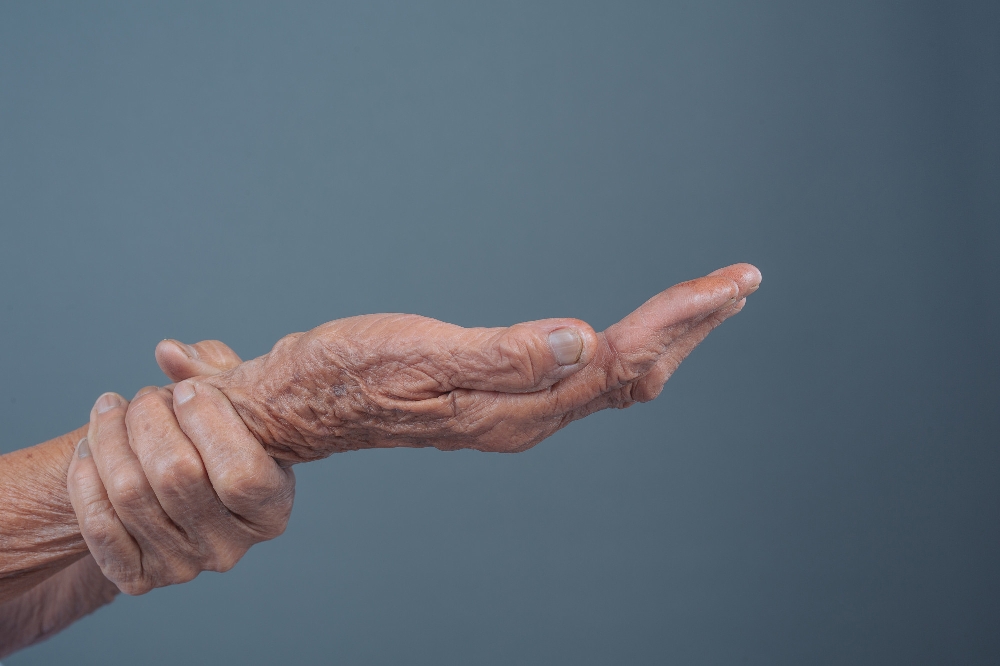
Assistive devices such as weighted utensils, wrist weights, and tremor-stabilizing tools can make daily tasks easier while treatment decisions are made. The Steadi-3 Plus Anti-Tremor Glove is a battery-free, passive magnetic device clinically tested for essential tremor and Parkinsonian tremor. It is an FDA-registered Class I medical device, and Pisces Innovation is its exclusive authorized distributor in the United States. In clinical testing using the Fahn-Tolosa-Marín scale, 84% of participants showed improved tremor control compared to wearing no device. Our team can help you consider whether it fits your situation.
Treatment Options for Essential Tremor
Many people do not need treatment for years, since the condition progresses slowly and mild tremor often warrants monitoring. When treatment is pursued, first-line medications are propranolol, a beta-blocker, and primidone, an anticonvulsant. Second-line options include other beta-blockers, gabapentin, topiramate, and clonazepam. For tremor that does not respond, options include deep brain stimulation (studies show 70 to 90% reduction), MRI-guided focused ultrasound (FDA-approved for essential tremor in 2016), botulinum toxin, and Gamma Knife surgery. Adaptive devices remain a parallel option at any stage.
The Emotional and Social Impact of Essential Tremor
Visible tremor often causes real embarrassment, and people describe avoiding restaurants and social settings where their hands will be seen. Clinical sources recognize anxiety and depression as comorbidities of essential tremor, part of the clinical picture rather than simple reactions to symptoms. Fear of dropping things or being judged can lead some people to restrict their lives before their tremor warrants it. Raising this with a physician or occupational therapist matters, because preserving independence and quality of life is central to management.
How Essential Tremor Progresses Over Time
Essential tremor is progressive but usually advances slowly, with average worsening in hand and arm tremor estimated at 1.5% to 5% per year, though individual variation is wide. In early stages, symptoms are often mild enough that people compensate without formal treatment. Over years, tremor may spread from the hands to the arms, head, and voice; it rarely affects the legs or feet, which helps distinguish it from some other movement disorders. The path to needing treatment often takes years.
Conclusion
Essential tremor is the most common movement disorder, affecting millions of people across all ages but becoming more prevalent with age. Understanding its symptoms, causes, and how it differs from Parkinson's disease gives patients and families a clearer picture to bring to a medical evaluation. It is not curable, but it is manageable through lifestyle changes, medication when appropriate, assistive devices, and professional guidance. Anyone noticing persistent, progressive shaking that affects daily life has good reason to seek evaluation.
About Pisces Innovation
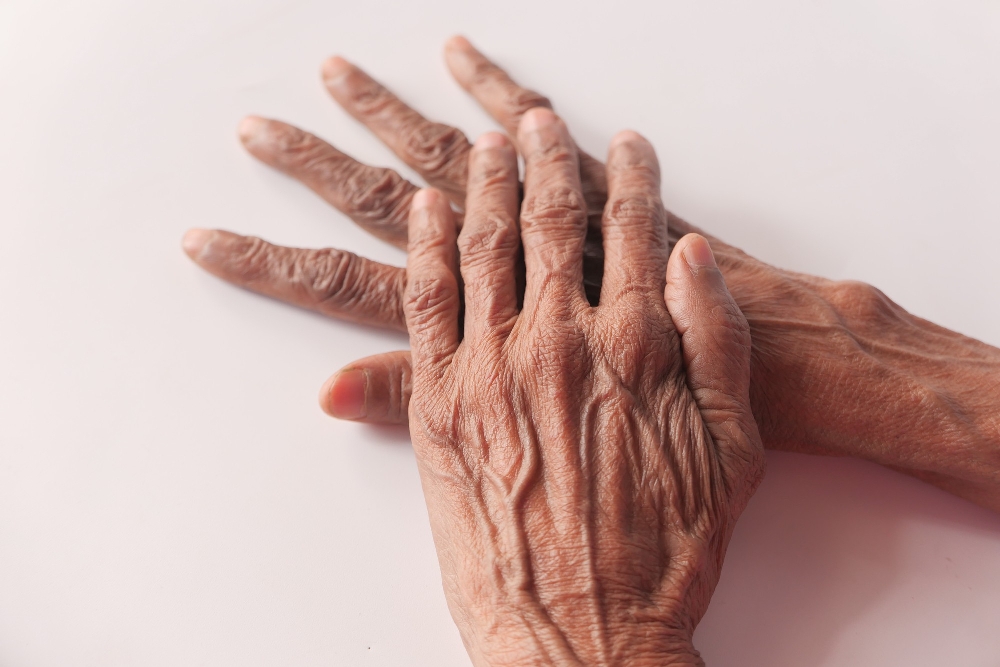
Pisces Innovation is the exclusive authorized US distributor of the Steadi-3 Plus Anti-Tremor Glove and supplies assistive devices for daily living. If you are exploring tools to manage tremor, our team is here to talk it through. Essential tremor is a movement disorder that causes involuntary, rhythmic shaking in the hands and arms, and sometimes in the head, voice, and other body parts. The shaking occurs during voluntary movement or when holding a position, not at full rest. It is the most common form of tremor, affecting an estimated 1% of people worldwide and about 5% of those over age 60. It is not life-threatening, does not affect lifespan, and is distinct from Parkinson's disease. About 50% of essential tremor cases have a familial component, which is why it is sometimes called familial tremor. In these families, it usually follows an autosomal dominant pattern, meaning a parent with the condition has roughly a 50% chance of passing it to each child. Inheriting the genetic factor does not guarantee the condition will develop, since environmental factors also appear to play a role. In the other half of cases, no family link is identified. The most important difference is when the tremor occurs: essential tremor is an action tremor, worst during movement, while Parkinsonian tremor is a rest tremor, worst when the hand is still. Parkinson's disease also involves symptoms not seen in essential tremor, including bradykinesia, muscle rigidity, and gait changes. Essential tremor usually affects both hands, though one side is often worse, while Parkinson's tremor is characteristically asymmetric. Neither condition is diagnosed by tremor alone. Stiffness, slowness, or one-sided symptoms make prompt evaluation important. Stress, anxiety, and emotional upset are among the most reliable amplifiers, because the adrenaline response directly worsens tremor amplitude. Caffeine stimulates the nervous system and is one of the most consistently cited dietary triggers, so reducing intake is often an early recommendation. Physical fatigue and poor sleep reliably increase severity. Certain medications, particularly stimulants, some psychiatric medications, corticosteroids, and asthma inhalers, can worsen tremor, so a physician should review the full list. Blood sugar instability, thyroid dysfunction, and illness can all cause temporary worsening. There is currently no cure for essential tremor. It does not resolve on its own and is a lifelong condition once established. Treatment focuses on managing symptoms and reducing functional impact rather than addressing the underlying neurological cause. Medications such as propranolol and primidone, adaptive devices, deep brain stimulation, focused ultrasound, and lifestyle modifications can all reduce the severity and impact of tremor. Many people with mild tremor live independently for years without formal treatment. The goal of management is preserving independence and quality of life. Occasional, mild shaking triggered by stress, caffeine, or fatigue is common and usually nothing to worry about on its own. See a doctor if tremors are persistent, worsening, or starting to interfere with everyday tasks like eating, writing, or getting dressed. If shaking appears alongside stiffness, slowed movement, or symptoms on one side of the body, prompt evaluation can help distinguish essential hand tremor from Parkinson's disease and other conditions. Earlier evaluation means more time and more management options.Frequently Asked Questions