
Medication for Parkinson's Hand Tremors: What to Know Before You Ask Your Doctor
TL;DR
- Medication for hand tremors in Parkinson's is individualized, not one-size-fits-all.
- Levodopa/carbidopa is the most common and effective first-line option.
- Dopamine agonists, MAO-B inhibitors, and COMT inhibitors serve different stages.
- Tremor response varies; some people keep residual tremor despite good treatment.
- Prepare a symptom diary and questions before your neurology appointment.
Medication for hand tremors in Parkinson's disease is one of the first questions patients and families raise at a neurology appointment. There is no standard prescription: the right choice depends on age, symptom severity, metabolism, and other health factors. This article explains the main drug classes, how they work, what they are used for, and what to realistically expect before that conversation.
Why Parkinson's Tremor Needs Its Own Medication Approach
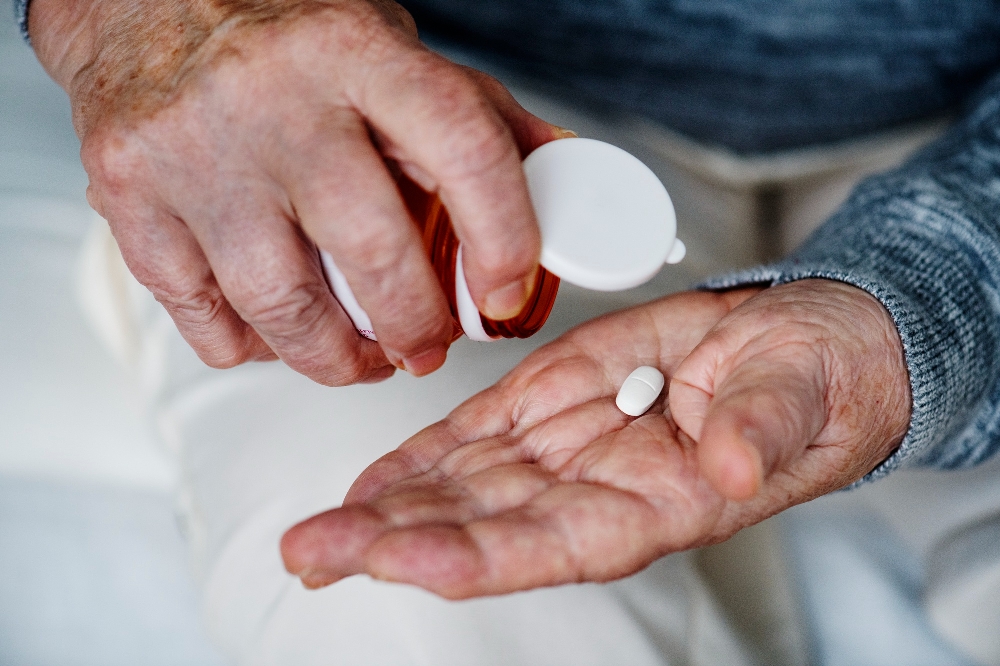
Parkinson's disease develops as dopamine-producing brain cells are progressively lost, disrupting the signals that control movement, and most motor symptoms, including hand tremor, stem from that deficit. Parkinsonian tremor is typically a resting tremor, most visible when the hand is still and often described as "pill-rolling" between thumb and forefinger; it eases with active use. Tremor is often the first motor symptom and affects roughly 70 to 90 percent of people with Parkinson's. Because the cause is neurochemical, treatment targets brain chemistry.
Levodopa and Carbidopa: The Most Common Medication for Hand Tremors
Levodopa, also called L-dopa, is the most commonly prescribed and most effective medication for hand tremors and other motor symptoms in Parkinson's. It converts to dopamine in the brain, partially replacing what damaged cells can no longer supply. It is usually combined with carbidopa (Sinemet), which allows lower doses and reduces side effects such as nausea. Many people respond well, though tremor sometimes improves less completely than stiffness or slowness. A physician adjusts dose and timing based on symptom control.
Dopamine Agonists: A First-Line Option for Hand Tremors Medication
Dopamine agonists (pramipexole, ropinirole, rotigotine) mimic dopamine rather than converting to it, directly stimulating the receptors involved in movement control. As a medication for hand tremors, they are often chosen first in younger patients to delay reliance on levodopa, and they can be used alone or added to levodopa. Side effects can include nausea, dizziness, light-headedness, confusion, and hallucinations, and some people develop compulsive behaviors. Tremor response varies, so review it with the prescribing neurologist.
MAO-B Inhibitors: Supporting Dopamine Levels
MAO-B inhibitors (rasagiline, selegiline, safinamide) block monoamine oxidase-B, the brain enzyme that breaks down dopamine, helping the brain make the most of the dopamine it still produces. They are often used early in Parkinson's, sometimes as initial therapy, or added later to extend levodopa's effect. Safinamide (Xadago) is indicated as an add-on for people experiencing wearing off between doses. Common side effects include nausea, dizziness, and headache, and these drugs interact with certain antidepressants, which is worth discussing with the physician.
COMT Inhibitors and Amantadine: Managing Medication for Hand Tremors Over Time
COMT inhibitors (entacapone, opicapone, tolcapone) block an enzyme that breaks down levodopa before it can act, keeping it active longer. They address wearing off, the return of symptoms between levodopa doses, by extending the window of control. Amantadine, first developed as an antiviral, can help with mild symptoms and with dyskinesia, the involuntary movements that can develop after years of levodopa use. Both are refinements a neurologist may add as the disease progresses, not first-line agents.
Anticholinergics for Tremor: A Narrow and Age-Dependent Use
Anticholinergics (trihexyphenidyl, benztropine) block acetylcholine, a brain chemical that competes with dopamine in movement-control circuits. This can reduce tremor and stiffness, but the drugs carry significant cognitive risks, including confusion, memory problems, and hallucinations. Parkinson's Foundation guidance advises avoiding them in people over 70 for this reason. They remain a consideration mainly for younger patients with tremor-predominant Parkinson's, and many neurologists now rarely prescribe them for older adults. Any decision should be made individually with the physician.
"On" Time, "Off" Time, and Wearing Off: What Every Patient Should Know

"On" time refers to periods when medication is working and motor symptoms, including hand tremor, are well controlled. "Off" time occurs when a dose loses effect before the next one, and tremor, stiffness, and slowness return. Wearing off is the gradual shortening of each dose's duration, typically developing after several years of levodopa therapy. Managing motor fluctuations means maximizing "on" time through dose timing, extended-release or infused levodopa, or added medications. A symptom journal of "on" and "off" periods helps guide each dose adjustment.
Managing Tremor Day-to-Day While Medication Is Being Established
Finding the right drug, dose, and timing takes several appointments, so many people need practical support in the meantime. The Parkinson's Foundation recognizes assistive devices as a tool alongside medication. The Steadi-3 Plus Anti-Tremor Glove is a battery-free, passive magnetic device clinically tested for Parkinsonian tremor. In clinical testing using the Fahn-Tolosa-Marín scale, 84% of participants showed improved tremor control compared to wearing no device. It is an FDA-registered Class I device, and Pisces Innovation is its exclusive authorized US distributor. Our team can discuss whether it fits.
What Medication Cannot Do: Realistic Expectations for Hand Tremors Medication
Parkinson's medication works better for some symptoms than others. Levodopa and dopamine agonists are particularly effective for slowness and rigidity, while tremor response varies more. Some people achieve excellent control from medication alone; others have a partial response, with residual tremor that still affects daily tasks. Partial response is not a treatment failure but a recognized reality that guides adjustments. The most effective approach usually combines medication with exercise, supportive therapies, and, where appropriate, assistive devices or surgery.
How to Have a Productive Medication Conversation With Your Neurologist
Preparation helps you take part in decisions. Before your appointment:
- Ask for a referral to a movement disorders neurologist.
- Bring a list of all medications and supplements, since Parkinson's drugs interact with some antidepressants and blood pressure drugs.
- Keep a symptom journal for one to two weeks, noting when tremor is worst and any patterns.
- Ask what medication, why, the expected results and timeline, and which side effects warrant a call.
Individualized treatment is iterative, so the first choice may not be the final one.
Non-Medication Options That Work Alongside Treatment
The Parkinson's Foundation describes exercise as "as important as medication," since regular activity supports motor function, balance, and mood. An occupational therapist can offer adaptive strategies that reduce tremor's daily impact while medication is refined. For medication-resistant tremor, deep brain stimulation and focused ultrasound are interventional options; deep brain stimulation in particular can reduce hand tremor symptoms by 70 to 90 percent. Adaptive devices such as weighted utensils and tremor-stabilizing gloves ease eating and writing.
Conclusion
Medication for hand tremors in Parkinson's is not a single drug with a single answer; it is an individualized, evolving plan shaped by age, symptom profile, and response to treatment. Levodopa/carbidopa, dopamine agonists, MAO-B inhibitors, and COMT inhibitors each play a role at different stages, and most patients use a combination over time. Understanding how they work and what to ask makes the conversation with your neurologist more productive.
About Pisces Innovation

Pisces Innovation is the exclusive authorized US distributor of the Steadi-3 Plus Anti-Tremor Glove and supplies assistive devices for daily living. If you are exploring tools to manage tremor, our team is here to talk it through. There is no single "best" medication. The most appropriate choice depends on age, symptom severity, other health conditions, and individual response. Levodopa/carbidopa (Sinemet) is the most widely used and most effective option for motor symptoms, including tremor, and it remains the benchmark for other drugs. Dopamine agonists are often preferred first in younger patients to delay long-term levodopa effects. Tremor sometimes responds less completely than stiffness or slowness, so the right medication is the one giving the most benefit with the fewest side effects for that person. Levodopa converts directly to dopamine in the brain, replenishing what damaged cells can no longer produce, and it offers the most effective motor control available. Dopamine agonists do not convert to dopamine; they act directly on the brain's dopamine receptors, mimicking its effect. Levodopa has superior motor control but a higher risk of long-term involuntary movements (dyskinesia). Dopamine agonists reduce early dyskinesia risk but carry side effects such as hallucinations and possible compulsive behaviors. Many people eventually use both; the neurologist decides where to start. "Wearing off" describes the return of symptoms, including hand tremor, stiffness, and slowness, during the window before the next scheduled dose. It happens because levodopa's duration of effect shortens as the disease progresses and the brain's capacity to store and release dopamine declines. Over time, each dose's window narrows. Management strategies include more frequent dosing, extended-release formulations, add-on medications such as COMT or MAO-B inhibitors, or long-acting delivery. A symptom diary tracking "on" and "off" periods helps optimize the schedule. Yes. Some people have tremor that does not respond adequately to medication even at appropriate doses. This medication-refractory tremor is more common in tremor-predominant Parkinson's, where tremor is the main feature rather than stiffness or slowness. It is not a treatment failure; it is a recognized outcome that points the physician toward other options. Deep brain stimulation and focused ultrasound are both specifically indicated for medication-resistant tremor, so discussing a poor response openly can open the path to evaluation. Provide a complete list of current medications, vitamins, herbal supplements, and over-the-counter remedies, since Parkinson's drugs interact with certain antidepressants, blood pressure medications, and supplements. Share any history of heart, kidney, or liver disease, mental health conditions, or substance use, as these shape which drugs are appropriate. Describe your tremor pattern, including when it is worst and which activities it affects. Mention family history, and ask how long the medication should take to work. Yes. The Parkinson's Foundation lists exercise, assistive devices, and surgical options as established tools alongside medication, and describes exercise as "as important as medication" for motor control, balance, and mood. Assistive devices such as weighted utensils and tremor-stabilizing gloves reduce the impact of hand tremor on daily tasks. Deep brain stimulation and focused ultrasound are options for tremor that does not respond adequately to medication. These strategies work best alongside a physician-supervised plan.Frequently Asked Questions