Shop by Category
    Close
    Filters
    Preferences
    Search Results
    RSS

    Blog

    0 What Is a Swivel Spoon? How It Works and Who It Helps

    TL;DR

    • A swivel spoon is an adaptive utensil with a rotating bowl that stays level.
    • It works purely mechanically, using gravity, with no batteries or electronics.
    • It suits mild to moderate hand tremor and limited coordination.
    • Severe tremor may need a motorized, sensor-based device instead.
    • An occupational therapist can help confirm the right fit.

    When hand tremor makes it hard to get a spoonful of food to your mouth, a swivel spoon is one simple, non-powered tool that can often help. This adaptive utensil has a rotating bowl mechanism that helps keep food level as your hand moves. This guide explains what you need to know to judge whether it fits your situation.

    The Basic Mechanism, Explained
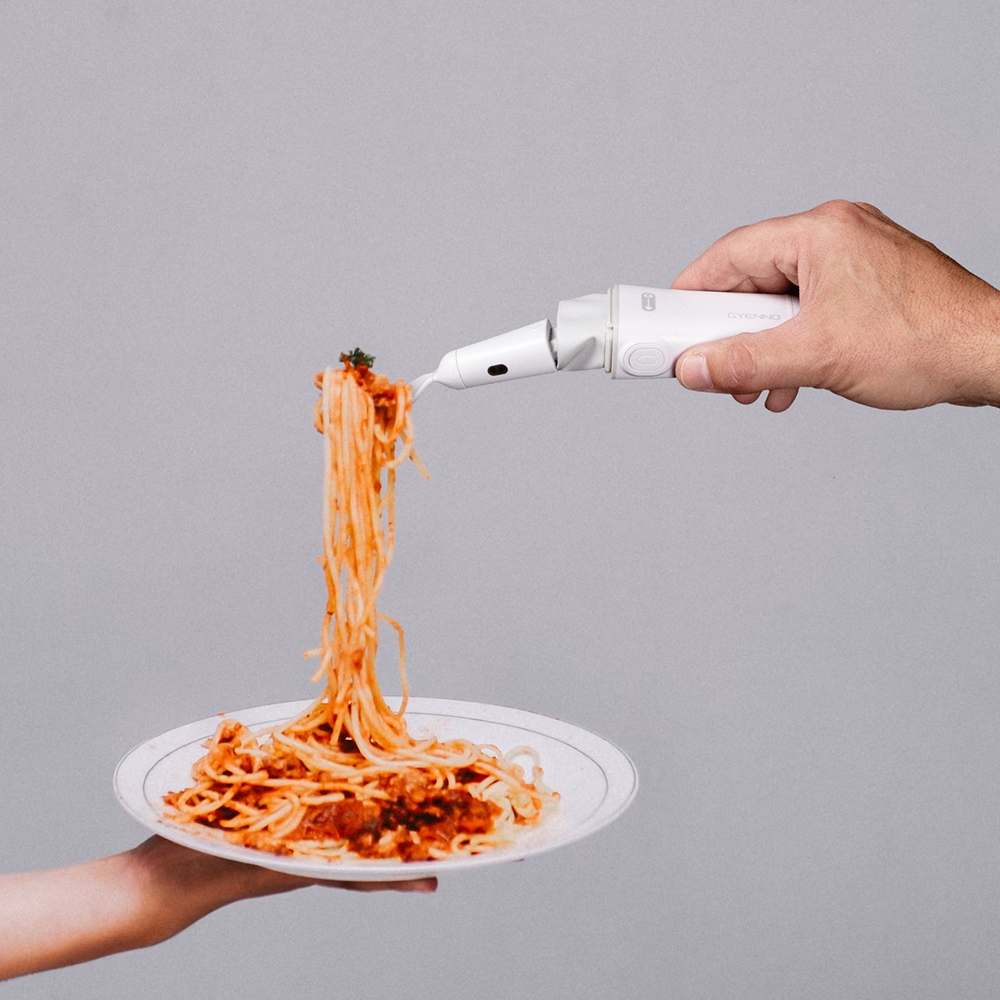
    Hand holding a white Gyenno utensil with a fork attachment lifting twirled spaghetti above a plate held by another hand

    At the heart of a swivel spoon is a pivoting swivel joint between the bowl and the handle. As the hand tilts or shakes, gravity keeps the weighted bowl hanging level, so food stays put instead of tipping out. The design is purely mechanical. No batteries or electronics to charge, replace, or maintain keep the utensil simple and reliable. That simplicity is part of its appeal.

    Who Swivel Spoons Are Designed For

    Swivel spoons are designed for people with mild to moderate hand tremor or limited coordination. That includes individuals managing Essential Tremor (ET), early-stage Parkinson's Disease (PD), or reduced grip strength who still want to eat independently. Because they are mechanical and affordable, swivel utensils are often a first, low-cost option that people try before exploring more advanced motorized eating devices. Many people use one alongside regular cutlery rather than replacing every utensil. 

    What It Can and Can't Compensate For

    A swivel spoon reduces spillage well for smaller-amplitude tremor, where the bowl can hang level between movements. It has limits, though. Severe or high-amplitude tremor can still overwhelm a passive swivel mechanism, because the motion outpaces what gravity alone can settle. This is where motorized, sensor-based devices become relevant, actively counteracting shake rather than simply letting the bowl rebalance. An occupational therapist can help judge where a tremor falls on that range. 

    Swivel Spoon vs. Swivel Fork vs. Full Utensil Sets 

    Most swivel utensils come as a standalone spoon, a swivel fork, or a paired set. Handle grips vary too, with standard, built-up, and strap-secured options to match different hand sizes and grip strength. Your choice often depends on your primary meal type.

    • Spoon: soups, cereals, and softer foods
    • Fork: solid foods and mixed plates
    • Paired set: varied meals across the day

    Everyday Use: What to Expect at the Table

    Expect a brief adjustment period as the hand learns to work with the swivel rather than fight it. Early meals may feel unfamiliar, and practicing with easy-to-scoop foods first can make the adjustment smoother. A swivel spoon works with most standard bowls and plates, so you don't need a special setup. Many designs in this category are dishwasher-safe, which keeps daily cleaning simple.

    Swivel Limiters and Why They Matter

    Some swivel spoon designs include a built-in swivel limiter that restricts how far the bowl can rotate. This small detail matters more than it sounds. Without it, an over-rotating bowl can tip food out the other direction, undoing the benefit. A limiter keeps the swing within a useful range, making scooping more controlled and predictable, especially when the hand moves suddenly or unevenly. It is worth looking for when comparing designs.

    Cost and Accessibility Compared to Powered Options
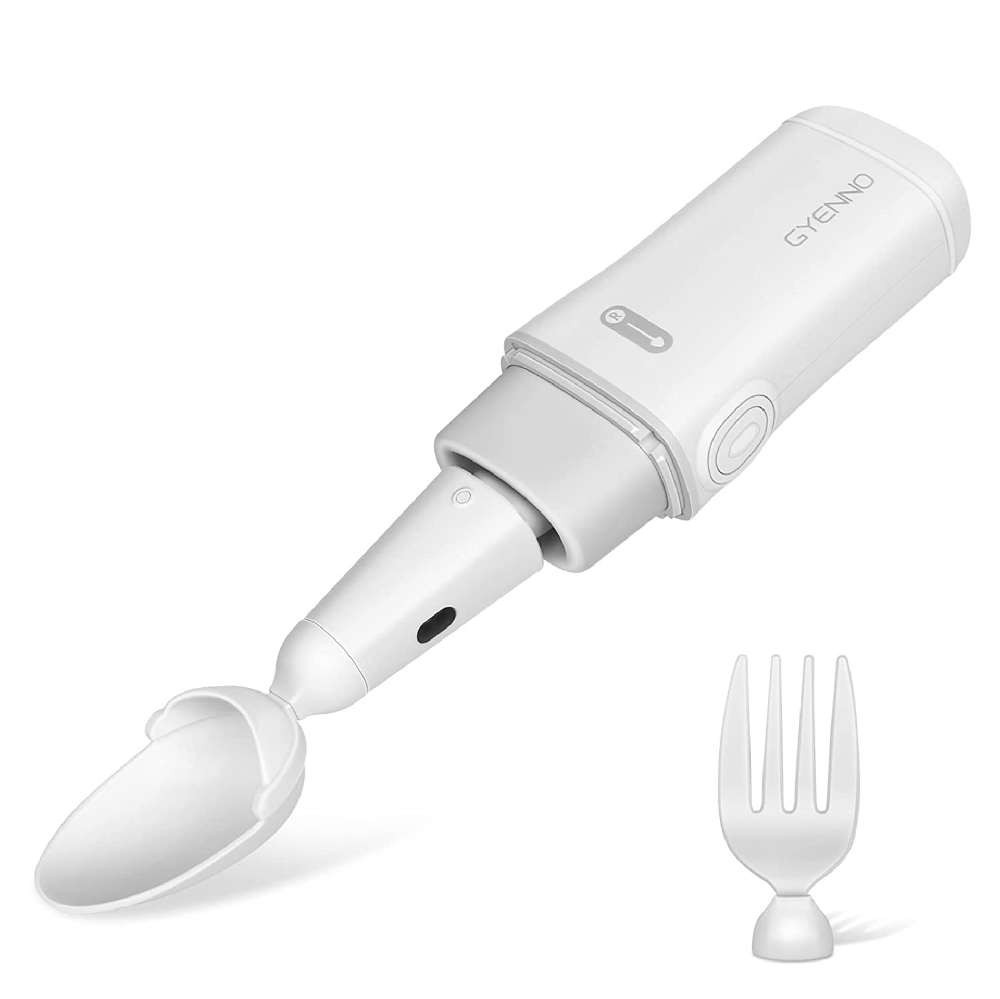
    White Gyenno handle with a swivel spoon attached and a detachable fork head shown beside it on a white background

    Cost is often the deciding factor between device types.

    • Mechanical swivel utensils: low-cost entry point, no power needed.
    • Powered, sensor-based spoons: significantly higher price point, battery or motor.

    Mechanical swivel utensils sit at the accessible end of adaptive eating, which is why they are often the first thing people try before considering a motorized device. Built-up or strap-secured handles add a little to the cost but often improve control. 

    When to Consider Moving Beyond a Swivel Spoon

    A swivel spoon may no longer be enough as circumstances change. Watch for a few clear signals that point toward a different solution.

    • Persistent spillage despite the swivel mechanism working as intended
    • Tremor amplitude that appears to increase over time
    • Growing frustration or fatigue at mealtimes

    If these patterns show up, it is worth discussing with an occupational therapist, who can assess the situation and make a formal recommendation suited to your needs.

    Caring For and Maintaining a Swivel Spoon

    Maintenance is refreshingly minimal. Depending on the materials, a swivel spoon is usually simple to hand-wash or clean in the dishwasher, so check the manufacturer's care guidance. Periodically check the swivel joint for wear, since that moving part does the work and should pivot freely. Unlike motorized alternatives, which require batteries and charging, this design keeps upkeep straightforward.

    Where to Get Guidance on Fit

    An occupational therapist can assess your grip, tremor pattern, and daily routine, then recommend the utensil type that suits you best. Many OT clinics let you trial a utensil before committing to a full set, so you can see how it performs at real meals. The right fit depends on hand size and tremor severity, not simply on brand, which is why a professional assessment is so valuable.

    Where Mechanical Solutions Reach Their Limit 

    For tremor beyond what a passive swivel can manage, people often look toward sensor-based, motorized stabilizing utensils that actively detect and counter movement. This is a distinct technology category that works on a different principle. We cover it in depth in a companion piece on smart spoons. The two suit different tremor levels. Think of this as a decision point: match the technology to the tremor pattern, then explore the category that fits.

    Is a Swivel Spoon Right for You
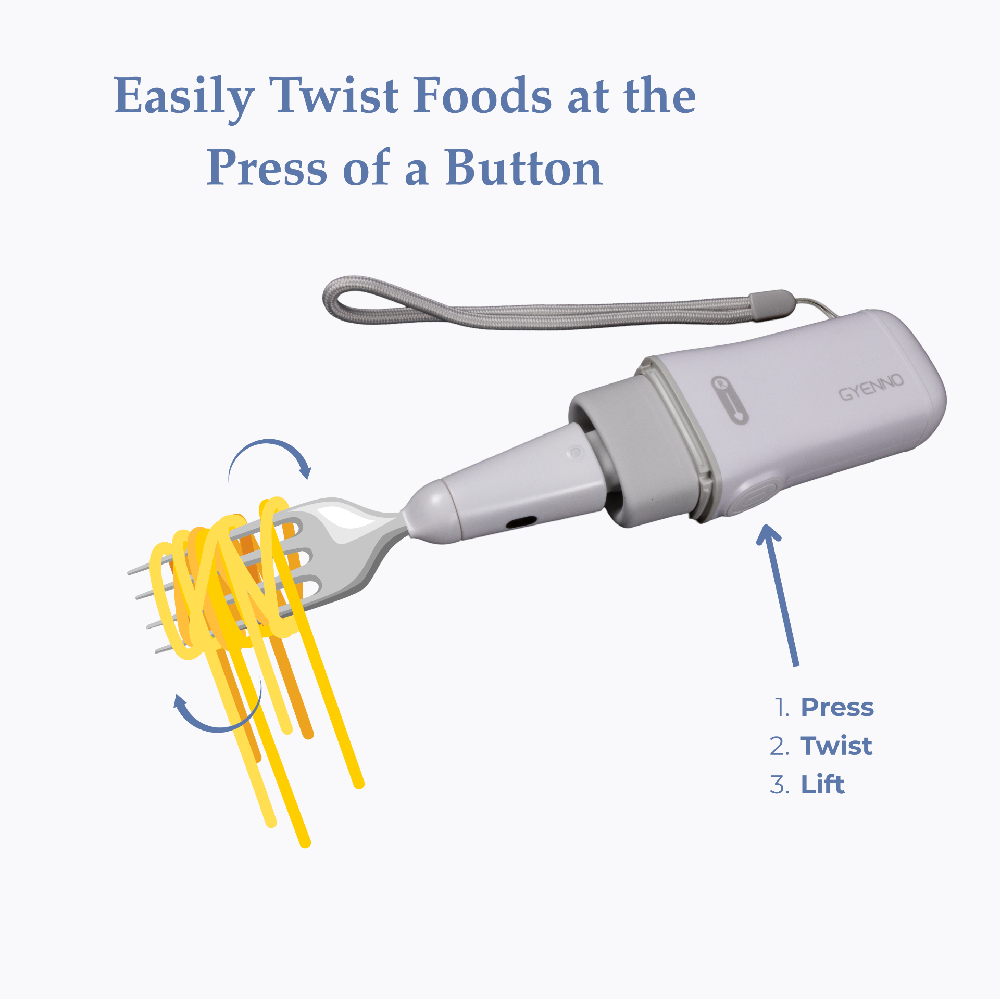
    Gyenno fork twirling spaghetti beside a Press, Twist, Lift guide headed: Easily Twist Foods at the Press of a Button

    A swivel spoon is a simple, mechanical tool that can make mealtimes easier for people with mild to moderate tremor, keeping the bowl level without batteries or complexity. It will not suit every situation, and severe tremor may call for a different approach. If you are weighing your options, an occupational therapist can confirm a proper fit for your grip and tremor pattern.

    Frequently Asked Questions

    Most standard bowls and plates work, but some pairings make scooping easier. A bowl or plate with a raised edge gives food something to push against as you scoop, and a non-slip mat keeps the dish from sliding when the hand moves. Shallow, flat plates are usually the hardest to scoop from. If one dish feels awkward, switching to a deeper bowl is often a simple first adjustment worth trying.

    They work best for mild to moderate tremor, but simple positioning changes can extend how well a swivel spoon performs. Resting the forearm or elbow on the table, sitting close to the plate, and choosing a heavier built-up handle all reduce how far the hand travels between scoops. If spills continue despite these changes, an occupational therapist can watch a real meal and assess whether a sensor-based anti-tremor spoon would better suit the tremor.

    A swivel limiter is a built-in stop on the joint. It matters most for people whose hand moves in sudden or uneven bursts, since those motions are most likely to swing an unrestricted bowl too far. When comparing products, look for wording such as “limited rotation” or “swivel stop” in the description. If you are unsure whether you need one, an occupational therapist can watch you eat and advise on the right design.

    Commonly, yes, but care instructions vary by model, so follow the manufacturer’s guidance. Whichever method you use, dry the swivel joint fully afterward, since trapped moisture or food can make it stiff. A joint that sticks, squeaks, or no longer lets the bowl hang level needs a thorough clean or a replacement, because a stiff swivel stops keeping food level and loses its main benefit at the table. Avoid soaking the joint for long periods unless the instructions allow it.

    Beyond the purchase price, ongoing costs differ too. A swivel spoon has no batteries, chargers, or electronics, so after you buy it, there is little else to pay for. Motorized spoons may need replacement attachments and, eventually, a new battery or handle. Because swivel utensils cost less up front, they are a practical way to test whether an adaptive spoon helps before committing to a powered tremor-stabilizing spoon, which is a larger investment.

    Start by asking your doctor or neurologist for an occupational therapy referral, or contact an outpatient rehabilitation clinic directly. Bring the utensils you use now and, if possible, eat a small snack during the session so the therapist can see the tremor at work. Note which foods spill most often, such as soups, rice, or peas, and at which meals. That detail helps the therapist recommend the right anti-tremor spoon or swivel design for your meals.

    0 Parkinson's and Swallowing: Staying Safe at Mealtimes

    TL;DR

    • Swallowing changes in Parkinson's develop gradually as muscle coordination slows.
    • Watch for food sticking, coughing, or a wet, gurgly voice.
    • Upright posture, small bites, and careful food choices reduce risk.
    • Thickened liquids and IDDSI levels are clinician-assessed, not self-directed.
    • A speech-language pathologist tailors a swallowing plan to each person.

    Parkinson's and swallowing can become a daily concern as the condition progresses and mealtimes start to feel effortful. If chewing, drinking, or finishing a meal now takes more work, you are not alone. This is common and manageable with the right strategies. Below, we explain why it happens, the warning signs, and practical ways to eat more safely.

    Why Parkinson's Affects Swallowing

    Older man in a maroon cardigan eating with a fork, illustrating Parkinson's and swallowing

    Swallowing depends on precise timing and coordinated muscle movements working together in a fast, automatic sequence. Parkinson's gradually slows and disrupts that muscle coordination, so the steps that move food and liquid safely toward the stomach become less reliable.

    These changes often develop slowly. Many people don't notice the difference at first, which is why understanding the mechanism matters before small difficulties become bigger ones.

    Early Signs of Dysphagia in Parkinson's 

    Swallowing changes usually show up in small, everyday ways. Watching for them early helps you raise concerns with a clinician sooner. Common signs include:

    • Food feeling stuck in the throat, or needing more effort to swallow
    • Coughing or choking on food or liquid during or after a meal
    • A voice that sounds wet or gurgly once eating finishes

    Any of these patterns, especially if repeated, is worth discussing with the care team.

    The Real Risk: Aspiration and Pneumonia

    When food or liquid enters the airway instead of the esophagus, it raises the risk of aspiration pneumonia. This is one reason unmanaged Parkinson's dysphagia is taken seriously in clinical settings.

    It also explains why proactive strategies matter. Rather than only reacting when choking happens, steady attention to posture, pacing, and texture helps protect the airway before problems develop. Early attention supports safer, more comfortable meals.

    Posture and Positioning at the Table

    How a person sits shapes how safely they swallow. Aim for an upright posture, with feet supported, using cushions or wedges if they help the body stay stable and aligned. After the meal, staying upright for about 30 minutes gives food time to settle and lowers the chance of reflux or aspiration.

    Pacing: Slowing Down Without Slowing Down Life

    A calmer pace makes swallowing safer without turning meals into a chore. Small bites and small sips, chewed thoroughly, give the muscles time to do their job. Avoid talking while eating or drinking, since dividing attention makes coordination harder. Many people find that eating during medication "on" times, when movement feels smoother, makes the whole meal more comfortable and manageable. Putting the utensil down between bites helps slow the pace. 

    Choosing Foods That Are Easier to Manage

    Food texture affects how safe a meal feels. Foods that hold together in the mouth, or that are easy to pick up and control, tend to be more manageable. If dry mouth is an issue, moistening dry foods with sauce or broth helps. It also helps to avoid mixed textures, such as cereal with milk, where you must control a solid and a thin liquid at the same time.

    When Thickened Liquids Become Part of the Plan

    Older man in a white polo shirt pressing his hand to his chest on a sofa beside several pill bottles

    Some people with Parkinson's-related dysphagia are moved to thickened liquids by their speech-language pathologist. Thickening slows how fast a drink moves, giving the swallow more time to stay coordinated and protected. IDDSI diet levels standardize how "thickened" is defined and tested, so everyone on the care team works from the same reference. This is not a self-directed change. It follows a clinician assessment of what is safe for the individual.

    Working With a Speech-Language Pathologist

    A speech-language pathologist (SLP) carries out an individualized swallowing assessment, observing how a person handles different textures and identifying where risk appears. There is no single "national program" that fits everyone. Therapy is tailored to each person's needs. The SLP often works within a multidisciplinary team that may include a dietitian and an occupational therapist, so they consider eating, nutrition, and daily function together.

    The Role of Hydration and Dry Mouth

    Some Parkinson's medications can cause dry mouth, which makes food harder to move and swallow. Dry mouth is a minor complication that can still affect comfort at the table. Staying hydrated supports swallowing function throughout the day. Moistening food helps, and a clinician can suggest other ways to manage dry mouth that suit the person’s assigned food and liquid levels. Follow the care team's guidance for that individual.

    Supporting a Loved One Without Taking Over

    Helping at mealtimes works best when it preserves independence. Allow extra time and avoid rushing, since pressure tends to make swallowing harder, not easier. Where possible, involve the person in food choices to protect their sense of dignity and control. Keep a quiet eye on patterns such as weight loss or reduced appetite. These can be early signals that it is time to loop in the care team for review.

    Everyday Support for Safer, More Independent Meals

    For people with Parkinson's managing thickened liquids or reduced lip closure and suck ability, controlled-pace drinking aids are one option care teams consider. Pisces Innovation is the exclusive authorized distributor of the Neater Powered Drinker, a switch-operated device that dispenses controlled amounts of liquid. It suits people with head control and swallowing ability but limited hand or arm function. It is a daily-living support tool, not a treatment for swallowing itself. 

    Making Mealtimes Safer, Not Smaller

    Older man with a gray beard touching his throat with a worried expression while seated on a gray sofa

    Parkinson's and swallowing changes tend to arrive gradually as muscle coordination slows, but thoughtful habits make a real difference. Upright posture, a calmer pace, and well-chosen food textures help keep meals safer and more comfortable. As swallowing changes progress, involving a speech-language pathologist keeps the plan matched to the person in front of you. The goal is not to make meals smaller or less enjoyable, but to protect safety while preserving independence and dignity.

    Frequently Asked Questions

    Parkinson’s can affect each stage of swallowing, from chewing and moving food to the back of the mouth to triggering the swallow and clearing the throat. Because the changes are gradual, people often adapt without realizing it, for example by eating more slowly or avoiding certain foods. A swallowing assessment shows which stage is affected, which shapes the strategies a speech-language pathologist recommends. Spotting these habits early gives the care team time to act before swallowing becomes unsafe.

    Beyond food sticking, coughing, and a wet voice, quieter signs are easy to miss: meals taking noticeably longer, avoiding certain foods or drinks, unintentional weight loss, and repeated chest infections or fevers. Keeping a simple note of when signs appear, such as the time of day or the type of food, gives the care team useful detail for a formal swallowing assessment. Family members often spot these changes before the person does, so their observations matter too.

    If the person eats in a recliner, bed, or wheelchair, aim for the same upright position used at the table: raise the backrest fully, support the feet, and use cushions to stop slumping. Avoid eating or drinking while reclined, even for quick snacks or sips. Bring the plate or cup close so the person does not lean or twist to reach it. Use other head or chin positions only if a speech-language pathologist prescribes them for that person.

    Once thickened liquids are prescribed, the level usually applies to every drink, including water, tea, coffee, and soups, not just some. Foods that melt into thin liquid in the mouth, such as ice cream or gelatin, may also need checking with the speech-language pathologist, since they can behave like thin drinks. The same level applies at home, in care facilities, and when eating out. Pre-thickened drinks are also available as an alternative to mixing at home.

    Swallowing can feel different at different times of day. Keeping a short log of meal times alongside how eating went, such as coughing, fatigue, or slower meals, helps the prescribing clinician see whether there is a pattern. Record easier meals too, since good days are as useful as difficult ones. Any change to medication timing should come from that clinician, not be made at home to fit meals. Bringing the log to appointments makes that conversation easier.

    Follow the IDDSI level your clinician has assigned rather than estimating by eye. Use commercial thickeners consistently, measuring to the product instructions so each drink reaches the same texture every time. If you are unsure which level applies or what a drink should look like, check with the speech-language pathologist before changing anything. Prepare thickened drinks close to serving time and recheck any that have been standing, since some thickeners continue to thicken.

    0 What Is a Dysphagia Diet? Textures, Liquids, and Levels

    TL;DR

    • What is a dysphagia diet: food and liquids modified for safer swallowing.
    • Texture (food) and thickness (liquid) are adjusted separately by level.
    • IDDSI standardizes eight levels, numbered 0 through 7.
    • A speech-language pathologist assigns the level after a swallow assessment.
    • Levels can change over time with clinician-guided reassessment.

    So what is a dysphagia diet? It is a way of eating in which food texture and liquid thickness are modified to make swallowing safer for someone with swallowing difficulty. It is not one-size-fits-all. The right approach is assigned by level, and those levels follow a global standard called IDDSI, which this article explains in plain terms.

    What a Dysphagia Diet Actually Changes

    Person using a knife and fork to eat dysphagia diet textured food from a blue plate

    A dysphagia diet works along two separate axes: food texture and liquid thickness. A clinician modifies each one independently based on the person's specific swallowing risk, so someone may need thicker liquids but a near-regular food texture, or the reverse. The goal is to reduce aspiration risk, where food or drink enters the airway, while still preserving good nutrition and hydration. This keeps the diet matched to each person.

    The IDDSI Framework in Plain Terms

    IDDSI stands for the International Dysphagia Diet Standardisation Initiative. It was created to standardize terminology globally, because descriptions previously varied by country and even between facilities, which caused confusion. The framework uses eight levels in total, numbered 0 through 7. Lower numbers describe liquids, higher numbers describe foods, and the middle levels overlap, giving everyone one shared language for safe swallowing. This consistency matters most when care moves between settings.

    What Is a Dysphagia 2 Diet

    A dysphagia 2 diet usually refers to Level 2 of the older US National Dysphagia Diet, called “Mechanically Altered.” It includes moist, soft foods that need some chewing. Under IDDSI, which is replacing that system, the closest match is Level 5, “Minced & Moist.” This is easy to confuse with IDDSI Level 2, “Mildly Thick,” which describes a liquid rather than a food. It still flows off a spoon, just more slowly. 

    What Is a Dysphagia 3 Diet

    A dysphagia 3 diet usually refers to National Dysphagia Diet Level 3, “Dysphagia Advanced,” which covers soft, nearly regular foods. IDDSI maps it to Level 6, “Soft & Bite-Sized,” or to “Easy to Chew,” a sub-level of Level 7. IDDSI Level 3 itself is different. It covers “Moderately Thick” drinks and “Liquidized” foods, blended completely smooth with no lumps. It is one of two levels, with Level 4, that span both drinks and foods. 

    How Food Texture Levels Progress (4 Through 7)

    Food textures climb through four stages, each allowing more chewing and biting effort:

    Level

    Name

    What it means

    4

    Pureed

    Smooth, no chewing needed

    5

    Minced & Moist

    Small soft lumps, minimal chewing

    6

    Soft & Bite-Sized

    Soft pieces, some chewing

    7

    Regular

    Everyday foods

    plan within that level, making sure meals stay balanced and nourishing. Levels are not fixed. They can change over time as the clinical team reassesses swallowing and adjusts the plan accordiThis progression typically reflects swallowing improvement over time, with reassessment guiding each step upward. Each step up is made with clinical guidance.

    Who Decides Which Diet Level Is Right

    A dysphagia diet level is assigned after a formal swallow assessment, not self-selected. A speech-language pathologist typically determines the appropriate level based on how a person manages different textures and thicknesses.

    A dietitian then manages the nutrition ngly.

    Why Thickened Liquids Matter So Much

    Woman with her hair in a bun looking down at a dysphagia diet bowl of food

    Thin liquids move fastest and are the hardest to control for some swallowing impairments. They can reach the airway before the swallow reflex is ready, raising aspiration risk.

    Thickening slows the liquid down, giving the person more time to coordinate and control each swallow. That added control is why liquid thickness is treated as its own axis, and why getting the assigned level right directly reduces aspiration risk.

    Common Mistakes Families Make With Modified Diets

    Caregivers sometimes trip over the same few things. Watching for these helps keep a modified diet safe:

    • Guessing at consistency instead of following the assigned level precisely.
    • Assuming visible improvement means they can self-upgrade the diet level without reassessment.
    • Not testing new foods or liquids against the IDDSI test methods before serving them.

    When in doubt, it is safer to check with the care team than to estimate at home.

    How Diet Levels Are Tested and Verified

    IDDSI provides simple physical tests for each level, not just descriptions. These include a flow test for liquids and a fork-pressure test for foods, so you can check consistency with everyday items. Clinicians, caregivers, and foodservice staff use the same IDDSI testing methods, which keep a Level 4 puree or a Level 2 liquid consistent across settings, whether at the hospital, in a care facility, or at home.

    Adjusting to Life on a Modified Diet

    A modified diet is a practical change, but it also carries an emotional side. Texture-modified eating can feel isolating socially, especially at shared meals where others eat differently.

    Involving the person in meal planning helps them stay in control of their own food choices. Thoughtful presentation matters as well, since food that still looks appetizing tends to support better intake and makes mealtimes feel more normal.

    Everyday Tools That Support a Modified Diet

    Older man with white hair drinking his dysphagia diet drink from a white mug indoors

    Alongside diet-level changes, many caregivers look at controlled-pace drinking tools for thickened liquids. Pisces Innovation is the exclusive authorized distributor of the Neater Powered Drinker, a switch-operated device that dispenses controlled amounts of liquid for people with reduced lip closure or suck ability. It suits people with head control and swallowing ability but limited hand or arm function. It supports independent drinking without replacing clinical guidance. 

    Conclusion

    So what is a dysphagia diet, in short? It is eating with modified texture and thickness, assigned by level and standardized by IDDSI so everyone shares one clear language. The levels run from 0 to 7, covering liquids and foods. The safest path is working with a speech-language pathologist and dietitian who assign and reassess the level, rather than self-adjusting. Following the assigned level closely keeps every meal as safe as possible. 

    Frequently Asked Questions

    No. "Soft diet" is an older, informal term that meant different things in different places. IDDSI's numbered levels replaced it with standardized, testable categories so a given texture means the same thing in every facility. A soft texture, for example, now maps to specific IDDSI definitions rather than loose wording, reducing confusion and making a dysphagia diet safer to follow across hospital, care, and home settings.

    This is a common point of confusion. Level 2, "Mildly Thick," is a liquid classification, not a food level, so it does not specify which foods are allowed. Food texture is governed separately by Levels 3 through 7. Someone on Mildly Thick liquids will also have a food level assigned alongside it, and those two assignments are made independently based on how the person manages foods and drinks.

    No. At Level 3, "Liquidized" foods must be completely smooth with no lumps and no separate liquid draining off. Any solid piece, however small, would not meet the Level 3 standard and would need a higher food level or further modification such as blending. The point of Liquidized texture is to remove the need for chewing entirely, so even tiny solids are kept out at this level.

    Follow the level assigned by the speech-language pathologist or dietitian, since the right thickness depends on the individual's swallow assessment. Use commercial thickeners according to their instructions and apply them consistently so every drink matches the assigned consistency. Avoid estimating by eye, because small differences change how the liquid flows. Where available, check the result against the IDDSI flow test to confirm it meets the target level.

    The level comes from a swallowing assessment, which usually starts with a bedside screening and moves to a formal evaluation by a speech-language pathologist, sometimes with an instrumental swallow study. If no assessment has been offered and swallowing seems difficult, families can ask the doctor for an SLP referral. The level is then written into the care plan so every caregiver, kitchen, and facility serves the same textures and thicknesses.

    Yes, with reassessment. Before the appointment, it helps to note how meals have been going: how long they take, any coughing, and which textures seem easier or harder. A speech-language pathologist uses those notes, along with a fresh assessment, to decide whether a less restrictive level is safe. Levels can also move the other way if swallowing becomes harder, so reassessment works in both directions.

    0 Stroke Dysphagia: Why Swallowing Changes After a Stroke

    TL;DR

    • Stroke dysphagia is a common, recognized swallowing problem after a stroke.
    • It happens when a stroke disrupts the brain's control of swallowing.
    • Signs include coughing at meals, a wet voice, and drooling.
    • A speech-language pathologist leads diagnosis and swallowing therapy.
    • IDDSI standardizes texture-modified diets and thickened liquids.

    For patients and families managing recovery, stroke dysphagia often first appears as coughing or choking at mealtimes. Noticing new swallowing trouble is understandable and concerning, but it is also a recognized and manageable post-stroke complication. This article explains what causes it, how clinicians diagnose it, and what diet and daily-living changes to expect as recovery progresses.

    What Dysphagia Means After a Stroke

    Older man with white hair coughing into his fist in a bright kitchen, a common early sign of stroke dysphagia

    Dysphagia is the medical term for difficulty swallowing. Swallowing is a multi-stage process, coordinated by the brain across oral, pharyngeal, and esophageal phases. A stroke can disrupt the neurological control of any stage, making food and liquids harder to manage safely. Dysphagia is the symptom; the stroke is the underlying cause affecting the nerves that direct those movements. 

    What Type of Stroke Causes Dysphagia

    Any stroke affecting the brain regions or nerves that control swallowing can trigger dysphagia. Brainstem stroke and bilateral hemisphere strokes are more frequently linked to swallowing impact because of the structures involved. Severity often correlates with the affected brain region, though it varies from person to person. Stroke location matters, but does not fully predict how each individual will be affected. The care team can explain what this means in each case.

    How Common Is Dysphagia After a Stroke

    Dysphagia after stroke is very common in the early recovery period. A 2024 meta-analysis in Frontiers in Neurology (Song et al.) found it in 43.6% of people after ischemic stroke and 58.8% after hemorrhagic stroke. Many recover within weeks as the brain and nerves settle, while some live with longer-term changes. Swallowing changes are expected in early recovery, but they still carry real risks if left unmanaged. 

    Recognizing the Signs of Swallowing Trouble

    Several signs are observable at the table. Watch for these during and after meals:

    • Coughing or throat clearing while eating or drinking
    • A wet or gurgly voice after swallowing
    • Food or liquid coming back through the nose
    • Drooling, food pooling in the mouth, or longer meal times

    Any of these patterns is worth raising with the care team, since early recognition supports safer eating.

    Why Aspiration Is the Main Risk to Understand

    Aspiration means food or liquid enters the airway instead of the esophagus. When material reaches the lungs, it raises the risk of aspiration pneumonia, a serious complication. That is why clinicians evaluate swallowing proactively after a stroke, not only once choking becomes obvious. Some aspiration is silent and produces no cough, so a formal assessment catches risks that mealtime observation alone can miss.

    How Swallowing Difficulty Is Diagnosed

    Diagnosis usually begins with a bedside swallow screening soon after the stroke. If signs are present, the patient is referred to a speech-language pathologist (SLP) for a formal assessment. For more complex cases, an instrumental swallow study, such as a videofluoroscopic or endoscopic evaluation, gives a detailed view of how food and liquid move. The SLP leads this process and uses the results to decide which textures are safe and what therapy is needed. 

    Understanding Diet and Liquid Texture Changes (IDDSI)

    A man touching his throat while seated on a gray couch showing stroke dysphagia

    Many stroke survivors move to a texture-modified diet and thickened liquids. The International Dysphagia Diet Standardization Initiative (IDDSI) is the internationally standardized framework, recognized by the American Speech-Language-Hearing Association (ASHA), that defines food textures and liquid thickness levels. … A later post covers IDDSI diet levels in more depth. 

    What Recovery Timelines Typically Look Like

    Recovery timelines vary widely. Many stroke survivors regain safe swallowing within the first few weeks, as early impairment eases. Others need longer-term management and ongoing follow-up with their care team. Early intervention, including prompt screening and SLP-guided support, is generally associated with better outcomes. Because each person differs, the care team adjusts the plan over time rather than relying on a fixed schedule. Asking about expectations early helps families plan.

    The Care Team Involved in Swallowing Recovery

    Swallowing recovery is a team effort. The core members typically include:

    • Speech-language pathologist (SLP): leads swallow assessment and therapy
    • Registered dietitian: manages nutrition needs and texture-modified diets
    • Physicians and nursing staff: oversee medical care and monitoring

    Regular follow-up keeps the plan aligned with progress, and knowing who does what helps families ask for the right support. If no SLP or dietitian has been involved yet, families can ask the care team for a referral. 

    Everyday Strategies That Support Safer Swallowing

    Small daily habits support safer swallowing alongside clinical care. Helpful strategies include:

    • Sitting fully upright during meals and staying upright afterward
    • Slower pacing, with smaller bites and sips
    • Following posture guidance, such as a chin-tuck, given by the SLP
    • Keeping up oral hygiene before and after meals to lower aspiration pneumonia risk

    These habits complement a professional plan rather than replace it. Ask the SLP which of these apply to you.

    Supporting Safer, Independent Drinking During Recovery

    Older man coughing into his fist, having trouble swallowing, wearing a white striped shirt

    For people managing thickened liquids or reduced lip closure and suck ability, controlled-pace drinking aids are one category caregivers and clinicians often look into alongside a therapy plan. Pisces Innovation is the exclusive authorized distributor of the Neater Powered Drinker, a switch-operated device that dispenses controlled amounts of liquid. It suits people with head control and swallowing ability but limited hand or arm function. It is a daily-living support tool, not a treatment for dysphagia. 

    Conclusion

    Stroke dysphagia is common, explainable, and manageable with the right team around you. Noticing swallowing trouble at meals is a signal to seek early evaluation, not a reason to panic. With prompt screening, SLP-led support, and IDDSI-based diet management, many people return to safer, more comfortable eating and drinking. Knowing the signs, the care team involved, and the daily habits that support safer swallowing helps families take an active part in recovery. 

    Frequently Asked Questions

    Yes, it can. When swallowing is difficult or frightening, people often eat and drink less, which can lead to malnutrition or dehydration if left unmanaged. This is one reason a registered dietitian is involved early, not just a speech-language pathologist. The dietitian helps maintain adequate nutrition and fluid intake through appropriate textures, while the SLP works on swallowing itself, so both intake and safety are addressed together.

    Yes. SLP-guided exercises, such as tongue and throat strengthening work, are a common part of swallowing therapy after a stroke. These exercises are individualized based on a formal assessment of each person's swallowing, rather than chosen on their own. Because the wrong exercise can be unhelpful or unsafe, a speech-language pathologist should prescribe and supervise them, tailoring the program to the specific impairment identified.

    Beyond the coughing, wet voice, and drooling that families usually notice first, some signs are easier to miss at home. These include avoiding certain foods or drinks, eating noticeably less, unexplained weight loss, and repeated chest infections or fevers after meals, which can point to silent aspiration. Report any of these to the care team so they can arrange a swallowing assessment promptly.

    IDDSI, the International Dysphagia Diet Standardization Initiative, is the global standard for describing food texture and liquid thickness. It matters because it gives everyone, from hospital staff to family at home, consistent terminology across care settings. Instead of vague terms that mean different things in different places, IDDSI diet levels use clear names and numbers, reducing confusion and helping ensure the prescribed texture is served safely and consistently.

    Often, yes. Many stroke survivors regain safe swallowing, especially when swallowing therapy starts early after a stroke and is led by a speech-language pathologist. Recovery varies from person to person: some improve within weeks, while others need longer-term management and ongoing follow-up. Progress depends on factors such as the stroke's location and severity, so the care team monitors each person and adjusts the plan over time rather than promising a single, fixed outcome.

    Thicken liquids according to the specific IDDSI level prescribed by a speech-language pathologist or dietitian, rather than guessing. Commercial thickeners are the standard approach and come with instructions for mixing to a set consistency, such as mildly or moderately thick. Because too thin or too thick can both cause problems, confirm the exact level with the care team and measure carefully each time you prepare a drink.

    0 Weighted Gloves for Tremors: Do They Actually Work?

    TL;DR

    • Weighted gloves for tremors reduce shake amplitude by adding inertia during movement.
    • They help most with action tremor during eating, writing, and drinking.
    • Resting tremor responds far less to the weighting mechanism.
    • Purpose-built tremor gloves are engineered differently from generic fitness gloves.
    • An OT or neurologist evaluation is the most reliable way to match a device.

    Weighted gloves for tremors are usually the first tool people discover when tremor turns eating, writing, or holding a cup into something that takes focus and effort. This article gives a clear, honest answer to whether they work: how the mechanism functions, what they can realistically do, and where their real limits are for everyday use.

    How Weighted Gloves for Tremors Work

    A doctor giving medication to a senior woman during a home health visit.

    Tremor is involuntary oscillatory movement, a repeating shake that typically falls between 4 and 12 Hz depending on the condition. Adding weight to the hand increases its inertia, so more force is needed to move it, and that resistance partially dampens the amplitude. The extra mass also raises proprioceptive feedback, the sensory signals the brain uses to track hand position, adding a stabilizing effect. The result is a smaller visible arc during movement, not elimination.

    Essential Tremor vs. Parkinson's Tremor: Does the Difference Matter?

    Essential tremor is primarily an action tremor, activating during voluntary movement like reaching for a cup or writing. Parkinson's disease produces two forms: a characteristic resting tremor when the limb is still, and an action or postural tremor during movement. Because weighted gloves counteract motion, they work best against action tremor, the type that disrupts daily tasks. For classic Parkinson's resting tremor, the mechanism applies less directly. Clinicians often grade tremors using the Fahn-Tolosa-Marín scale, and knowing which type dominates helps predict whether a glove will help.

    Generic Weighted Gloves vs. Purpose-Built Tremor Gloves

    Standard weighted fitness gloves were designed for strength training, with mass distributed for workouts rather than targeting tremor amplitude. Purpose-built tremor gloves use strategic weight placement calibrated to the tremor axis, sometimes tuned to the frequency range where the tremor occurs, or built around a tuned mass damper.

    Generic gloves can offer modest relief for mild tremor through the same inertial mechanism and make for a reasonable low-cost trial. For moderate-to-severe tremor or tasks needing preserved finger dexterity, a purpose-built tremor device is usually the better fit.

    How to Choose: Weight, Sizing, and Material

    Lighter weights, roughly 1 to 2 lbs, are sensible starting points for mild tremor. More weight is not always better, since heavier gloves increase fatigue over extended use. Heavier options should be trialed gradually, ideally with OT guidance.

    • Fit: snug but not constricting, so the weighted gloves for tremors keep contact with the tremor axis.
    • Material: breathable fabrics wear more comfortably than neoprene, which can cause sweating and irritation.
    • Dexterity: fingertip coverage can interfere with the fine motor task itself.

    Daily Tasks Where Tremor Gloves Make the Biggest Difference

    Eating is one of the highest-impact tasks where weighted hand gloves for tremors help, stabilizing the hand during the fork-to-mouth motion and reducing spillage. Writing and drawing are commonly cited improvements, since the added weight slows the arc during controlled handwriting. Drinking benefits too, with a steadier wrist during the lift of a cup. The glove only needs to be on the affected hand during the task, since wearing it at rest adds fatigue without benefit.

    Getting the Most from Weighted Gloves

    Wear tremor gloves only during the task where the shake is most disruptive.

    • Start with short sessions of 20 to 30 minutes, then extend as the hand adapts.
    • Position the weighted component against the dorsal surface of the hand, not slipped to one side, for proper fit.
    • Hand-wash and air-dry after each use to prevent fabric degradation and skin irritation.

    Give yourself time to adapt. Benefit often becomes clearer over several weeks as you learn to use the glove during specific tasks.

    Limitations of Weighted Gloves and Who They Suit Least

    Very severe tremor can exceed what added weight alone dampens, because at a certain amplitude the passive counterforce is insufficient. Resting tremor, particularly the classic Parkinson's pill-rolling shake, responds less to the action-tremor mechanism. Extended wear brings hand and arm fatigue, so a heavy glove worn all day is not sustainable for people needing all-day support. Importantly, gloves for hand tremors manage symptoms in the moment and do not address the neurological cause. For severe or complex cases, consult a neurologist.

    A Clinically Tested Tremor Glove with Evidence Behind It

    A mature man talking with his doctor during a home visit about his health.

    Among purpose-built tremor gloves, the Steadi-3 Plus Anti-Tremor Glove is a battery-free option evaluated in clinical studies. On the product page, clinical testing showed meaningful improvement in tremor control compared to no device, including results from a blinded assessment against placebo. It is an FDA-registered Class I medical device, and Pisces Innovation is its exclusive authorized US distributor. A money-back guarantee applies within a set return window, subject to the terms listed on the product page. Full product details and current return terms are available on the product page.

    What to Ask Your Neurologist or OT Before Buying

    Bringing the right questions to your care team helps match a device to your needs.

    • Is my tremor primarily an action tremor or a resting tremor? This shapes whether a weighted glove is appropriate.
    • What is the approximate frequency of my tremor? Some purpose-built devices are tuned to specific ranges.
    • Are there contraindications for me, such as an implanted device?
    • Would an OT-supervised assessment help before I select a device?
    • Can you document medical necessity? A letter supports VA claims where a device is eligible.

    Beyond Weighted Gloves: Other Tremor Device Technologies

    Weighted gloves are one option among several essential tremor technology categories.

    TechnologyHow it worksPower
    Tuned mass damperCounterweight floats in a magnetic or spring field, oscillating against the tremorBattery-free, continuous
    Gyroscopic stabilizationSpinning gyroscopes resist wrist reorientation through angular momentumBattery-powered
    TENSWrist-worn pulses aim to disrupt the tremor circuitBattery-powered


    Each has different evidence, weight, and cost; the right choice depends on tremor type, severity, lifestyle, and budget.

    Tremor Glove Coverage Options

    Coverage for wearable tremor devices varies, so it helps to explore your options before you buy. Pisces Innovation has served VA hospitals for over 15 years and welcomes VA-related inquiries from veterans and care teams. Private insurance coverage for these devices remains limited, so confirm your benefits with your insurer first. Many states also run Assistive Technology Act programs that offer short-term device loans, and some may have tremor devices available to try during real daily tasks.

    Conclusion

    Weighted gloves for tremors can reduce tremor amplitude for many people, particularly action tremor during eating, writing, and other daily tasks. How much they help depends on tremor type and severity, and on whether the glove is purpose-built or a generic fitness product. They manage the functional impact of tremor rather than its cause, so an evaluation by an occupational therapist or neurologist remains the most reliable way to match a device to your needs.

    About Pisces Innovation

    Close-up of an elderly man's hand holding a mobile phone.

    Pisces Innovation is the exclusive authorized US distributor of assistive devices for eating, drinking, and tremor management, including the Steadi-3 Plus Anti-Tremor Glove and Neater Eater eating and drinking devices, and has served VA hospitals nationwide for over 15 years. If you are exploring options, our team is here to talk it through.

    Frequently Asked Questions

    Yes, for many people. Weighted gloves for tremors reduce tremor amplitude by adding inertial resistance to involuntary hand movement, which can make fine motor tasks like eating and writing more manageable. The benefit is strongest for action tremor, the type that activates during movement and is primary in essential tremor and task-related in Parkinson's disease. They do not eliminate tremor or treat its neurological cause; they manage the functional impact during the task.

    A weighted glove is any glove with added mass, including generic fitness gloves designed for workouts rather than tremor. An anti-tremor glove, or purpose-built tremor device, is engineered with the tremor mechanism in mind: strategically placed weights calibrated to the tremor axis, or a more advanced approach such as a tuned mass damper or gyroscopic stabilizer. Purpose-built tremor gloves may carry clinical evidence supporting their effectiveness, while generic weighted gloves typically do not.

    Weighted and purpose-built tremor gloves can help with the action tremor component of Parkinson's disease, the tremor that activates during voluntary movement and affects eating, writing, and daily tasks. Parkinson's resting tremor, which occurs when the hand is still, responds less because the dampening effect requires movement.

    A neurologist familiar with the individual's specific tremor profile is the right person to advise whether a wearable device is likely to provide meaningful benefit. Not everyone with Parkinson's has the same pattern, so the recommendation depends on which tremor is most disruptive.

    There is no single correct weight. Lighter gloves, around 1 to 2 lbs, are a reasonable starting point for mild tremor, while heavier weights may dampen more for greater tremor severity. More weight is not always better, since heavier gloves increase hand and arm fatigue over extended use, which can become its own limitation.

    Consulting an OT before choosing a weight range is advisable, especially for moderate-to-severe tremor or extended daily use.

    Some users notice reduced tremor amplitude immediately upon wearing the glove during a task, since the inertial effect is mechanical and begins as soon as the glove is on. The functional benefit often improves over the first several weeks as the person adapts their movements to the added weight and learns to use the tool during specific tasks. If there is no benefit after four to six weeks of consistent use, revisiting weight selection or consulting an OT is appropriate.