
One-Handed Kitchen Gadgets: What to Look For
TL;DR
- One-handed kitchen gadgets remove the need for a second stabilizing hand at every mealtime task.
- Core prep tools: a spike one-handed cutting board, a rocker knife, and adaptive container openers.
- Core eating tools: scooper plates, suction bases, adaptive handles, and universal cuffs.
- Non-slip matting is the low-cost base that makes every other tool work better.
- An OT assessment matches the right combination to each person's functional profile.
Managing a meal with only one working hand or arm, whether after stroke, amputation, or hemiplegia, reshapes every task, and one-handed kitchen gadgets are the category built to help. These adaptive eating tools and preparation aids restore independence at both the table and the counter. This guide covers cutting, eating, opening, and stabilization.
Why One-Handed Eating Requires Specialized Tools
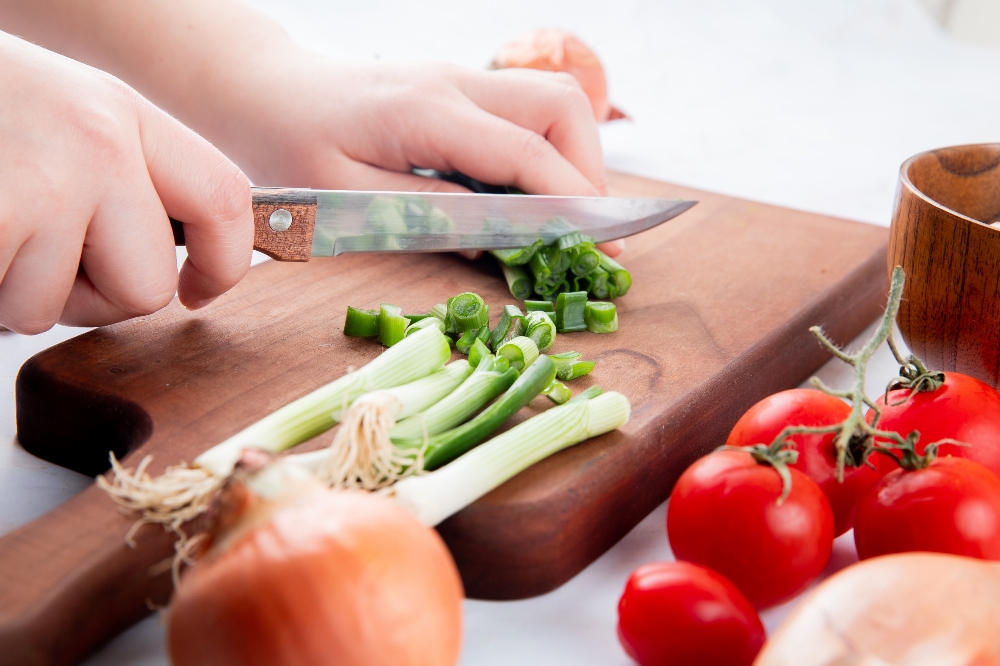
Most kitchen tools and utensils assume two functional hands: one to hold, the other to operate. Conditions that affect only one side, including hemiplegia, hemiparesis, stroke, and upper limb amputation, break that assumption and turn simple tasks like spreading butter or opening a jar into real obstacles. One-handed kitchen gadgets address this directly by removing the need for a second, stabilizing hand. Without the right tools, this gap can mean relying on a caregiver for activities of daily living the person could otherwise manage independently, from cutting food to preparing a full meal.
The One-Handed Cutting Board: The Essential First Tool
A standard cutting board needs one hand to stabilize the food or the board and one hand to cut, which is exactly what a one-handed cutting board enables the user to do. Stainless steel food spikes hold fruit, vegetables, or meat firmly in place for a single controlled cutting motion, while a raised corner guard lets a person spread butter, jam, or condiments on bread without the item sliding away, something that's unexpectedly hard one-handed. A non-slip suction cup base keeps the whole board fixed to the counter without any need to press down on it. Combination boards go further, adding a mounted blade or grater so a person never has to manage a board and a separate knife at once, which is why introducing these tools early in any one-handed food preparation assessment is essential.
Rocker Knives and One-Handed Cutting Utensils
Standard knives require a slicing stroke that needs one hand on the handle and one stabilizing the food, a motion that isn't possible with only one functional hand. A rocker knife solves this with a curved blade that cuts through a rocking, back-and-forth motion instead, needing only one hand and no bilateral coordination. Handle styles vary: a T-grip rocker knife suits a vertical palm press, while an L-shaped handle works better for a horizontal pull. A wheeled pizza cutter works well for sandwiches and soft foods.
Plates and Dinnerware for One-Handed Eating
Without a second hand to stabilize the plate, pushing food onto a utensil usually sends the plate sliding across the table, which is one of the more frustrating parts of one-handed eating. A scooper plate solves this with a raised rim on one side that creates a wall to push food against, and many come as a suction cup plate that locks to the table so it never needs to be held at all. A plate guard offers the same food bumper function as a removable ring that clips onto a standard plate, useful for anyone who wants to use their regular dishes some of the time. A non-skid base under any plate or bowl adds a simpler layer of stability for spoon control.
Adaptive Handle Options and Universal Cuffs
Grip weakness and grip absence call for different solutions among one-handed cooking utensils. A built-up handle addresses weakness by spreading the grip demand across a wider area of the palm, while a bendable handle can be shaped to reach the mouth at an angle that matches a person's specific range of motion. Pre-shaped angled utensils reduce the wrist rotation needed to eat with one hand. For grip absence rather than weakness, a universal cuff removes the requirement entirely: the utensil straps to the hand so it can be directed without being held. For complete hand loss or one-sided paralysis, a cuff-based grip alternative is often the only functional option once modified handles are no longer enough.
Opening Jars, Cans, and Containers One-Handed
Opening a jar or can is a bilateral task most people perform without thinking: one hand holds and stabilizes while the other twists or levers. A wall-mounted jar opener grips the lid so a person can apply turning force with their functional hand alone, and an under-counter or suction-base adaptive container opener pad grips the jar to the counter for the same effect. A battery-operated electric can opener walks around the rim automatically and stops when finished, needing no second hand and leaving no sharp edge. Rounding out these one-handed cooking tools, one-handed scissors remove the need for bilateral cutting of packaging, and lever-style bottle openers reduce the twisting torque required for screw caps, all supporting everyday kitchen independence.
Non-Slip Matting: The Simplest Stabilization Tool
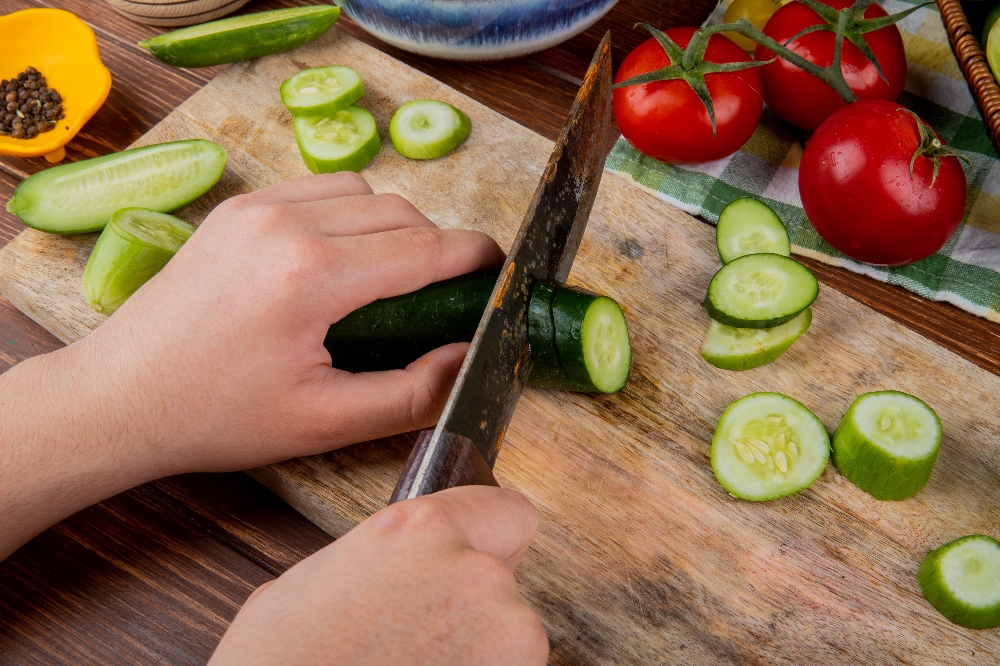
Nearly every one-handed kitchen task is harder on a slippery surface, which is why non-slip matting underlies almost every other tool on this list. Rolls of material such as Dycem can be cut to size and placed under cutting boards, bowls, and mixing containers for surface stabilization that keeps them from shifting during use, and the same material can line cabinet shelves so items don't slide when reached with one hand. Placed under a plate or bowl at the table, it can even remove the need for a suction-base plate for some users, a much cheaper option among one-handed kitchen gadgets. Non-slip placemats serve a similar purpose and wash more easily, making matting a good tool for anyone still building confidence in their one-handed technique and general kitchen independence.
When One-Handed Use Reflects Broader Arm and Upper-Limb Limitation
One-handed limitation sometimes reflects a broader picture of upper limb weakness, such as after a stroke that reduces strength throughout the affected arm, after a spinal cord injury, or with a progressive neuromuscular condition like ALS or MS. In these cases, tools designed for one-handed grip or cutting may not fully close the gap; the person may also need support for the arm itself, or a device that performs the food-to-mouth motion when directed arm movement is also affected. Pisces Innovation is an authorized distributor of adaptive feeding equipment, arm support devices, and self-feeding devices for people with significant upper-limb limitations, including ALS, spinal cord injury, MS, and stroke, and has served patients and institutional buyers such as VA hospitals for over 15 years. These broader-limitation solutions are worth exploring alongside standard one-handed kitchen tools when a person's needs extend past grip or cutting alone.
Organizing the Kitchen for One-Handed Workflow
Kitchen organization matters as much as the tools themselves. A well-organized one-handed kitchen reduces the number of reaching, holding, and switching tasks a person has to manage. Gathering all ingredients and one-handed cooking tools before starting removes the need to search mid-task, which matters more when setting an item down and picking it back up takes extra effort. Placing frequently used items at counter height instead of in upper cabinets avoids reaching above shoulder height with one hand, which is unstable and unsafe. Choosing the oven or broiler over the stovetop when possible reduces the need to handle hot, heavy pots of liquid, a task that needs both control and stability that are harder to manage one-handed. Preparing extra portions to freeze also cuts down how often a full adaptive cooking preparation session is needed, supporting long-term kitchen independence as part of daily activities of daily living.
Adaptive Kitchen Workstations: When Multiple Tools Combine
An adaptive kitchen workstation combines several one-handed cooking tools into a single counter-mounted system: a spike board, a corner guard, a jar clamp, and often a removable grater or slicer built around the same base as a one-handed cutting board. This kind of setup suits someone who cooks regularly and would rather have one consolidated station than several separate tools scattered around the kitchen. The built-in clamp handles jar-opening without a separate device, freeing up counter space, and non-slip suction pads keep the entire system fixed in place while cutting or spreading force is applied. Most models are dishwasher safe and compact enough to store flat when not in use, making an adaptive kitchen workstation worth considering for anyone whose meal preparation independence depends on more than a single tool gap.
How to Approach Getting Started with One-Handed Cooking
Starting with simple one- or two-step recipes keeps the first attempts manageable and builds confidence with new one-handed cooking utensils before tackling anything more demanding. Gathering all ingredients and pre-cutting or pre-portioning items before starting, or using pre-prepared ingredients where possible, is a standard early strategy. Practicing with the tools themselves before adding food, such as opening the can opener or using the cutting board with a practice vegetable, builds familiarity with the mechanics while the stakes are still low. An occupational therapist can provide a formal adaptive kitchen assessment: identifying which specific tasks are most challenging, recommending the right combination of tools, and supporting practice until the new workflow feels automatic. Progress toward full kitchen independence is gradual, and what feels effortful at first typically becomes second nature with repeated practice.
Conclusion
The right combination of one-handed kitchen gadgets generally covers three areas: preparation tools like a one-handed cutting board, rocker knife, and container openers; eating tools like a scooper plate, adaptive handle, or universal cuff; and stabilization tools like non-slip matting and suction bases. An occupational therapy assessment remains the most reliable way to match tools to an individual's specific functional profile, since the right choice depends on exactly what function is limited and how. For people whose one-handedness is part of a broader picture of upper-limb or neuromuscular limitation, the right solution set may extend beyond standard adaptive kitchen tools, and an OT can help identify what's needed next.
About Pisces Innovation
Pisces Innovation is the exclusive authorized US distributor of assistive devices for eating, drinking, and tremor management, including Neater Eater eating and drinking devices and the Steadi-3 Plus Anti-Tremor Glove, and has served VA hospitals nationwide for over 15 years. If a one-handed limitation is part of a larger functional picture, our team is here to talk it through. A strong foundational set of one-handed kitchen gadgets includes a spike-board cutting board, a rocker knife, a scooper plate with a suction base, non-slip matting, and a battery-operated can opener. Beyond the basics, adaptive handle utensils or a universal cuff can help depending on grip capacity, along with an adaptive jar opener and a folding pan holder for stovetop cooking. The right selection depends on which tasks are most difficult for the individual, since no single set fits everyone. An occupational therapy assessment remains the most reliable way to identify the specific combination a person needs. Hemiplegia, full paralysis on one side, means tools for one-handed eating have to remove any need for the affected hand entirely, since the unaffected hand has to do everything. A scooper plate with a suction base lets a person push food against the rim and load a utensil without stabilizing the plate with the other hand. A rocker knife allows cutting without needing the affected hand to hold the food steady. A universal cuff or hand-strap holder lets a utensil be directed without a grip if the functional hand also has some limitation. An occupational therapy evaluation guides the specific choice of adaptive eating tools based on the degree and pattern of limitation. A rocker knife is a curved-blade knife designed to cut food with a rocking, back-and-forth motion rather than the sawing stroke a standard knife requires. It lets a person cut without needing a second hand to stabilize the food or apply opposing pressure. It comes in several handle styles, including T-grip, L-shaped, and vertical handles, to suit different grip profiles and conditions. Smaller versions are designed for use at the table rather than only during food preparation, letting a person cut their own food independently while eating. Weighted versions can also help dampen tremor during cutting, making a rocker knife one of the more versatile one-handed cooking utensils available. Yes. Many people resume cooking independently after a stroke using a combination of adaptive tools and adjusted technique. A one-handed cutting board, rocker knife, and non-slip matting, all core one-handed cooking tools, address most kitchen preparation tasks, while a scooper plate, suction cup base, and adaptive utensils cover the table side of eating. Early practice with guidance from an occupational therapist builds confidence and helps identify the specific tools that match an individual's pattern of limitation after stroke. Progress toward full kitchen independence is gradual but generally realistic for most people managing one-sided limitations from hemiparesis or a similar condition. A scooper plate is a purpose-built plate with a raised rim built into one side of the plate itself. A plate guard is a removable ring that clips onto a standard plate to create that same raised edge only when it's needed. Functionally, the result is the same either way: a stable surface for one-handed eating that lets a person push food against an edge while loading a utensil, without needing a second hand. Plate guards suit people who want to use their own plates in social settings and add the adaptive feature only when it helps. Scooper plates often come with a built-in suction cup base, combining both features in a single piece of dinnerware. An adaptive jar opener and a battery-operated electric can opener make this task manageable with one hand. The electric can opener grips the lid and walks around the rim automatically, needing no second hand and leaving no sharp edge behind. A wall-mounted jar opener bracket grips the lid so a person can apply turning force with their functional hand without holding the jar steady, and an under-counter suction-base jar opener pad grips the jar to the counter for the same effect. One-handed scissors and safety scissors open packaging without any need for bilateral cutting, and lever-style bottle openers or built-up grips reduce the torque required for twist caps, rounding out a set of one-handed cooking tools that supports everyday kitchen independence.Frequently Asked Questions