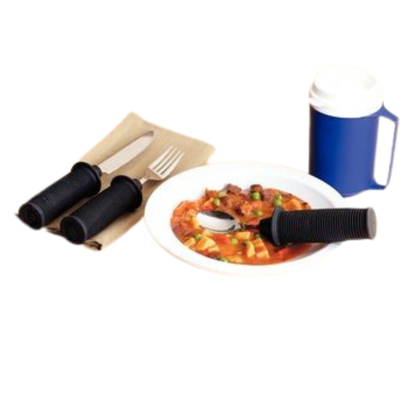
Essential Tremor Devices
Choosing an essential tremor device is rarely about how a product works in theory. It is about whether it makes a real difference at the table, with a cup, or during everyday hand tasks. Before you compare options, our essential tremor management framework explains how tremor is managed in practice.
Pisces Innovation is the exclusive authorized US distributor of the Steadi-3 Plus Anti-Tremor Glove, and this collection groups it with other essential tremor assistive devices by the task each one supports. You can compare options by where tremor interferes most, instead of sorting through a long catalog.
The range falls into three families:
- Wearable steadying: the Steadi-3 Plus anti-tremor glove is an FDA-registered Class I medical device, and its clinical testing referenced the Fahn-Tolosa-Marín scale. In clinical testing, 84% of participants showed improved tremor control compared with no device, and results showed a 70% improvement compared with placebo. The glove carries a one-year warranty.
- Eating utensils: Gyenno Bravo Twist tremor-stabilizing spoon uses motorized stabilization to counteract hand movement while you eat. Anyone with a pacemaker or an electrical stimulation device should check with their physician before using it.
- Assistive eating and drinking: the Neater Eater Manual supports people whose limited hand or arm function makes using a standard utensil difficult, using an adjustable, damped utensil arm to help bring food to the mouth.
These essential tremor devices suit people living with essential tremor or Parkinsonian tremor, and the related conditions listed on each product page. The practical payoff is greater independence and dignity at mealtimes, and less pressure on caregivers who often step in to help. Results vary by person, device, and tremor severity.
A simple decision path helps. If the tremor affects general hand use, a glove may be the place to start. If eating is the main struggle and the person can still lift a utensil, a tremor-stabilizing spoon may be a good fit. If hand or arm function is more limited, consider an assistive eating or drinking device. Each hand tremor device is described on its own page, with specifications you can review.
Pisces Innovation has served VA hospitals for 15+ years. If you would like to understand which of our products might help in your situation, our team is here to talk it through. Assistive devices for essential tremor are tools that steady the hand or take over part of a task, so eating, drinking, and daily activities stay possible. Some add stability to the hand itself, while others change the task so it demands less steadiness. These aids support function and help manage the effects of shaking. They do not treat the underlying condition, and the right choice depends on the person. Tremor devices can be grouped by how they work. Passive devices need no motor, such as the Steadi-3 Plus glove and the Neater Eater Manual, whose damped arm helps guide food to the mouth. Active devices, such as the Gyenno Bravo Twist spoon, use a motor to counteract shaking in real time. The best essential tremor device depends on which activity the tremor disrupts most, and each product page lists specifications. Wrist-worn and wearable approaches generally aim to steady or dampen hand movement during tasks, and the mechanism differs by product. The wearable in this range is the Steadi-3 Plus glove, which uses passive, battery-free vibration damping and is an FDA-registered Class I medical device. It is designed to support steadier hand movement, not to eliminate tremor, and results vary from person to person. Beyond mealtimes, a better-matched device can make everyday hand tasks such as holding a cup or writing a note feel more manageable, and some people feel more at ease eating with others. For caregivers, the right fit can mean fewer moments that need hands-on help. Occupational therapists can help weigh options for an individual or a care facility. A tremor-stabilizing spoon is designed to counteract hand shake during eating. Gyenno reports that the Bravo Twist reduces shakes by up to 85% compared with using a normal utensil, and it can log tremor data to share with a physician. How much it helps depends on the individual. For context on tremor types, you can check our Understanding Essential Tremor and Parkinson's.Frequently Asked Questions

ELISpoon


Gyenno Bravo Twist Tremor-Stabilizing Spoon

HandSteady Rotatable Handle Cup

Steady Spoon